
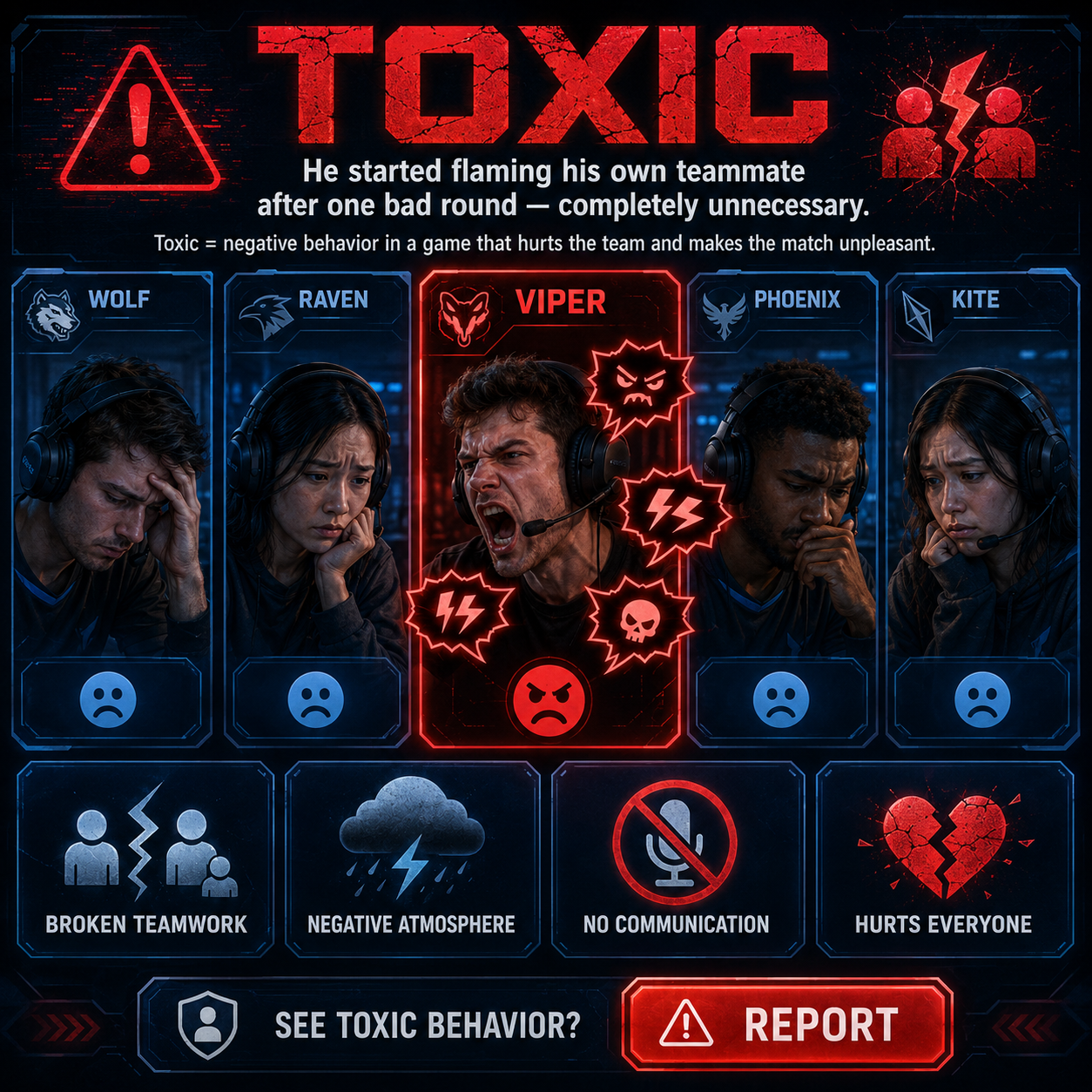
Behaviour that is deliberately harmful, negative, or damaging to others in an online community.
"The atmosphere in that lobby was completely toxic — insults every single round."
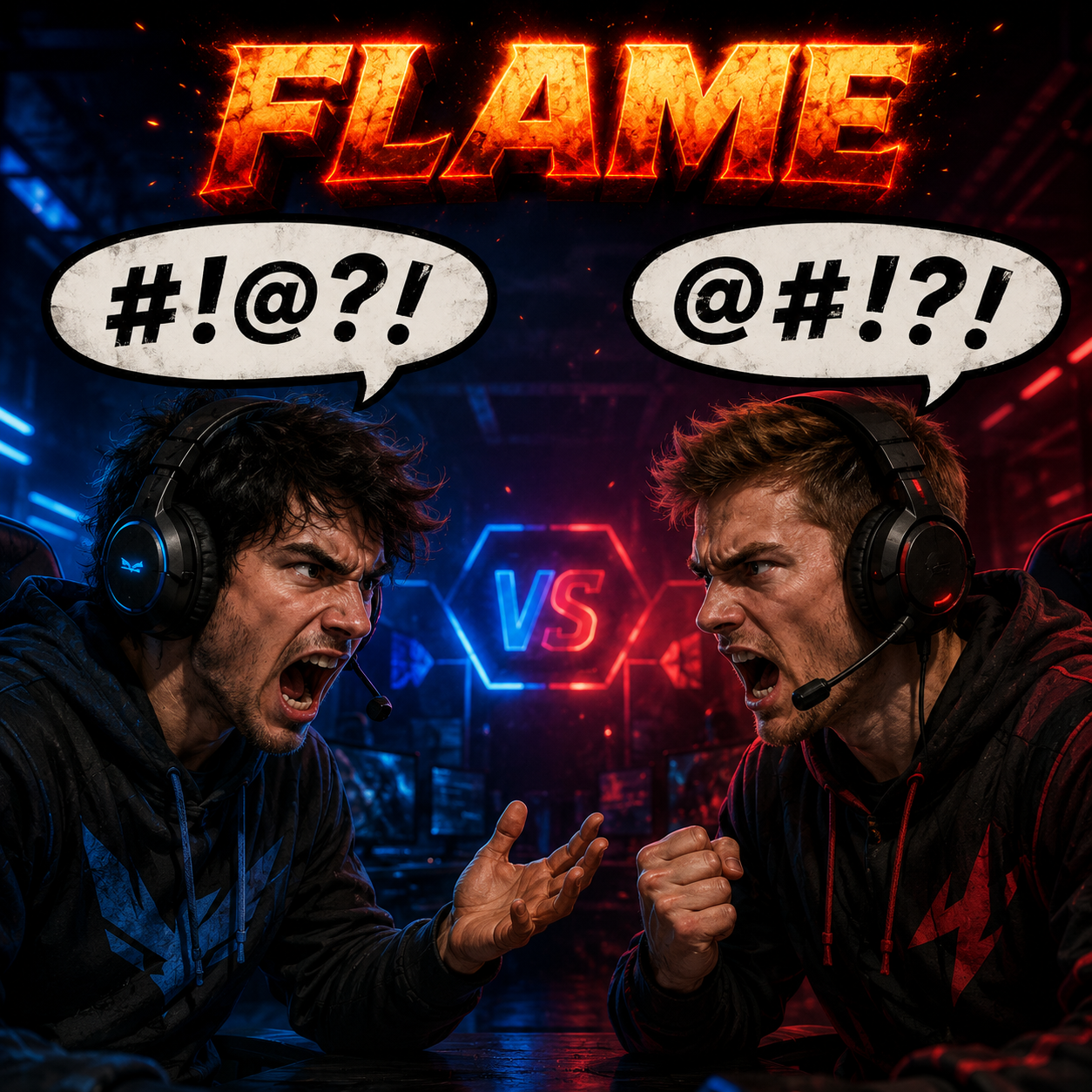
To aggressively insult or attack another player, usually in text or voice chat after a mistake or loss.
"He started flaming his own teammate after one bad round — completely unnecessary."
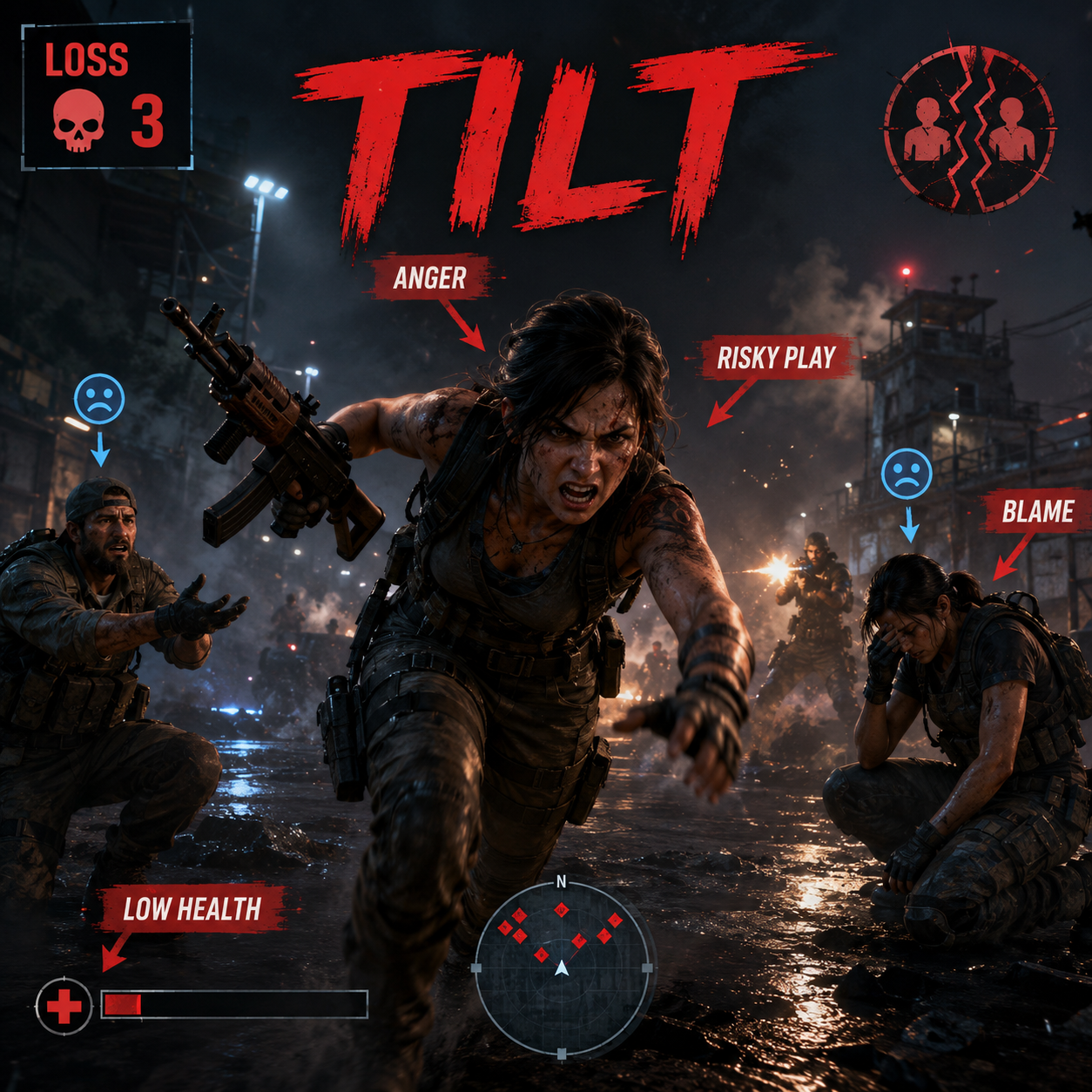
To become emotionally destabilised and frustrated, causing you to play worse and react negatively to everything.
"She went on full tilt after the third loss — started making risky plays and blaming everyone around her."
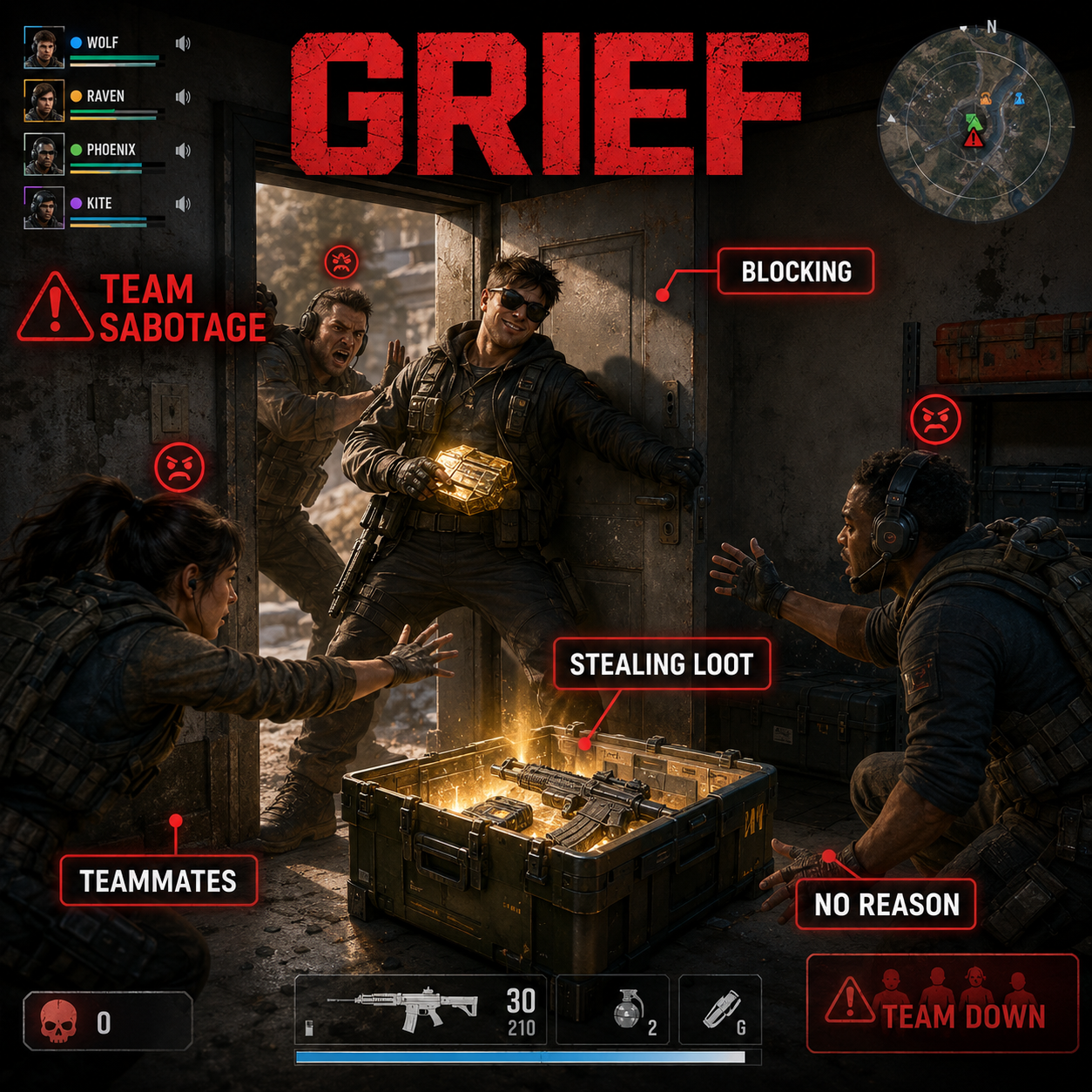
To deliberately sabotage or ruin another player's game experience for your own amusement, with no competitive reason.
"He was griefing the whole lobby — blocking doors and stealing loot from his own teammates."
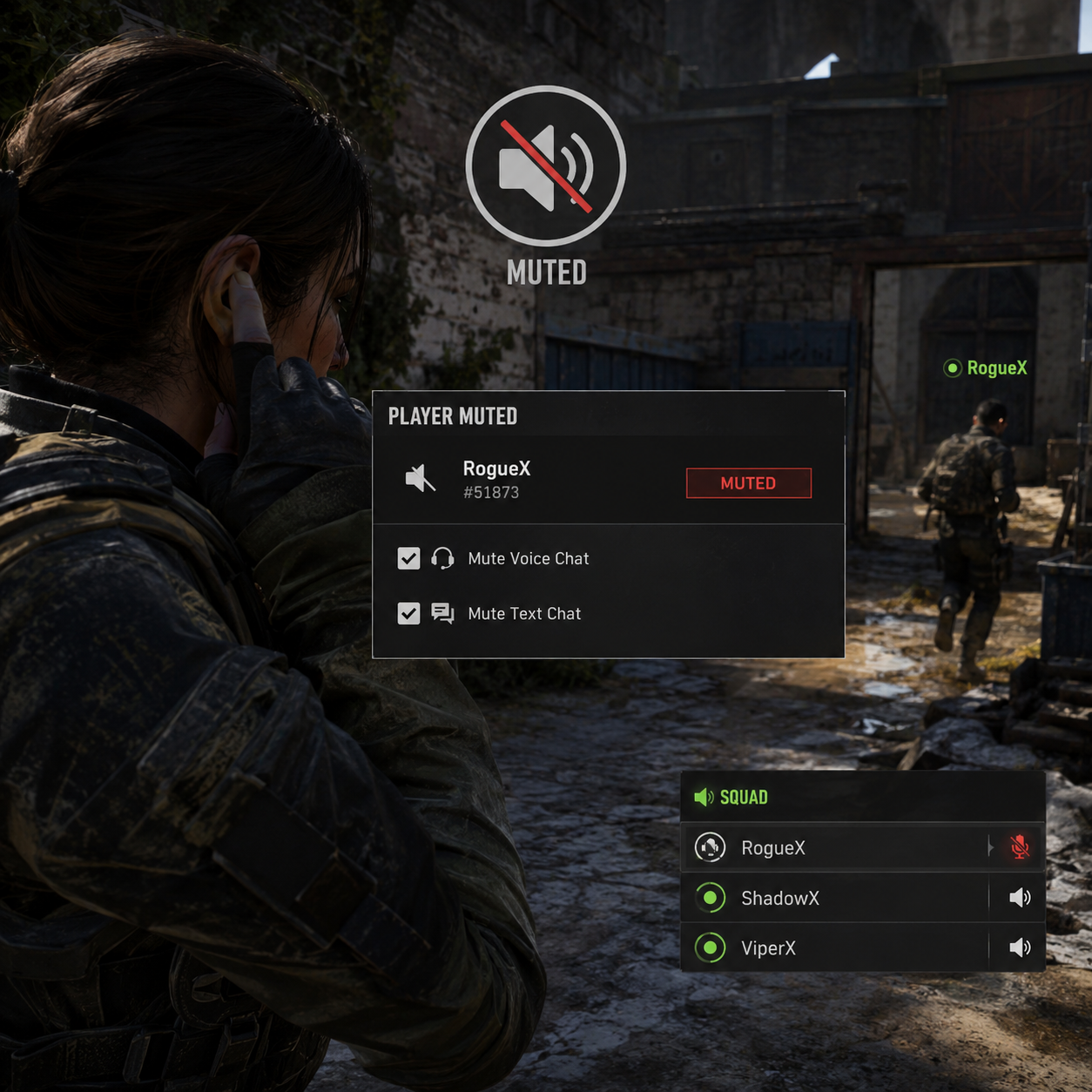
To silence a player so their voice or text messages can no longer reach you during the game.
"I muted him immediately after the first comment — life is too short for that kind of negativity."

To formally flag a player's behaviour to the game's moderators or developers so they can investigate and act.
"Report and move on — don't waste energy arguing. Let the system handle it."
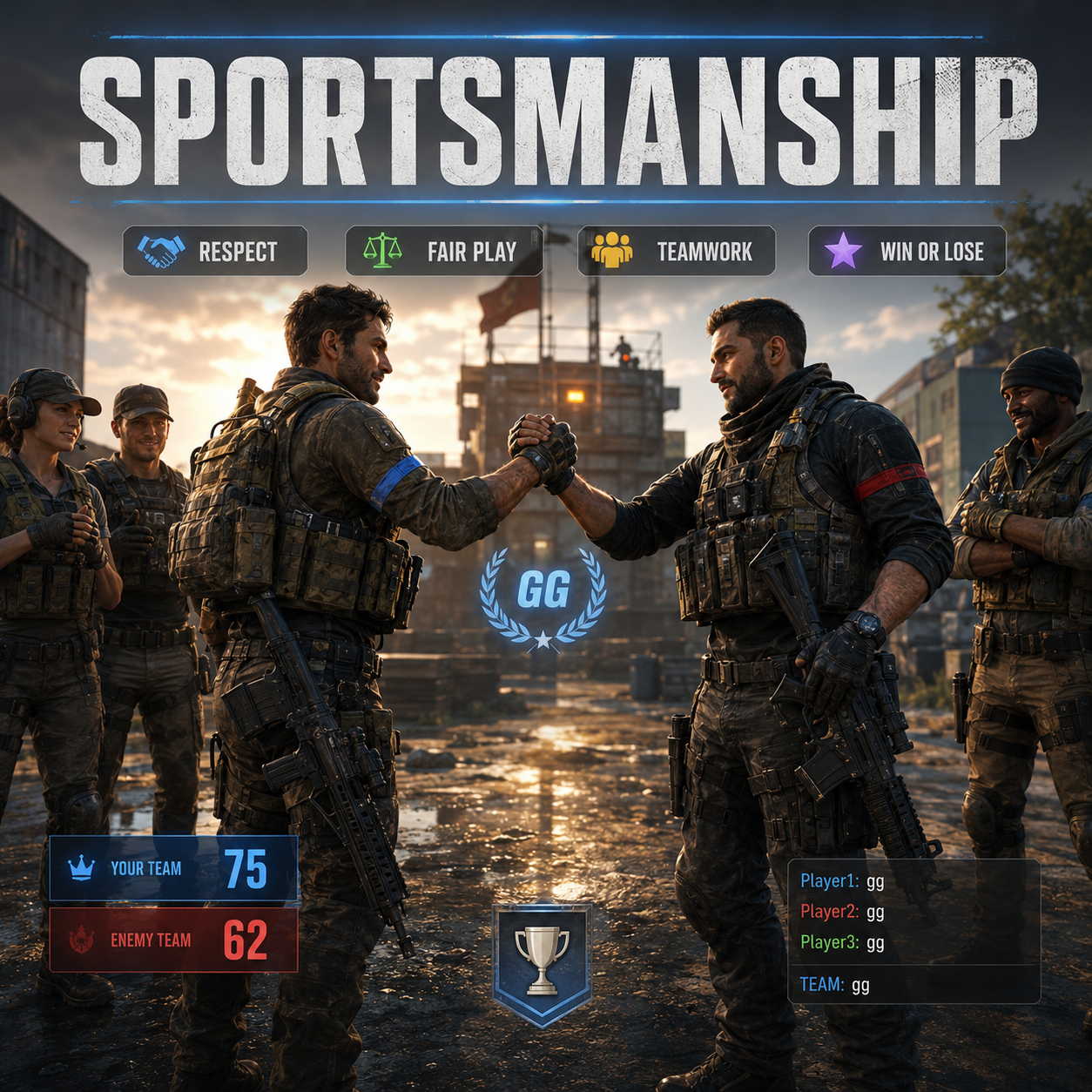
Respectful, fair, and generous behaviour toward opponents and teammates — whether you win or lose.
"Typing 'gg' at the end — regardless of the result — is basic sportsmanship. It costs nothing."
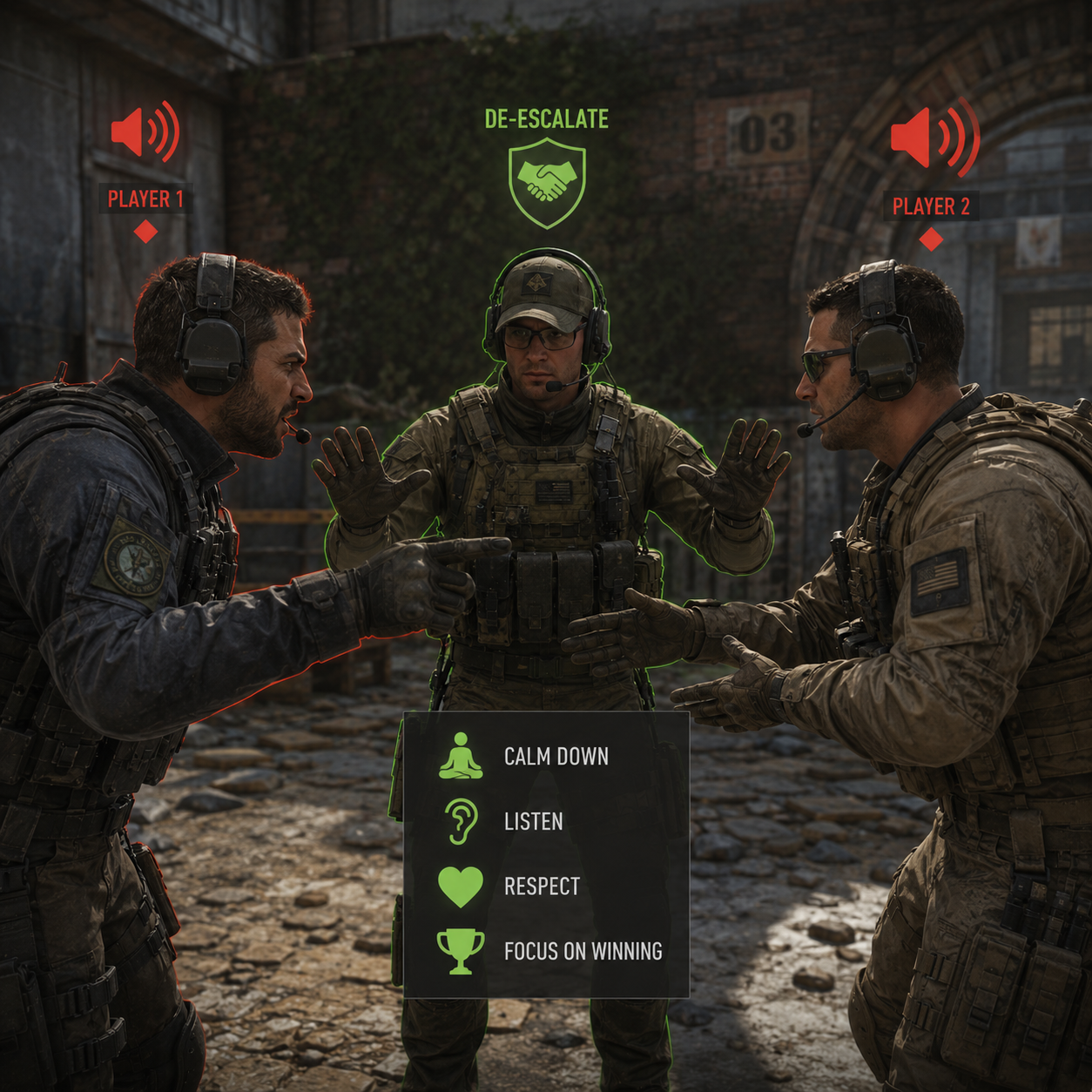
To reduce the tension or intensity of a conflict — making a heated situation calmer before it gets worse.
"The team captain stepped in to de-escalate before the argument got completely out of hand."
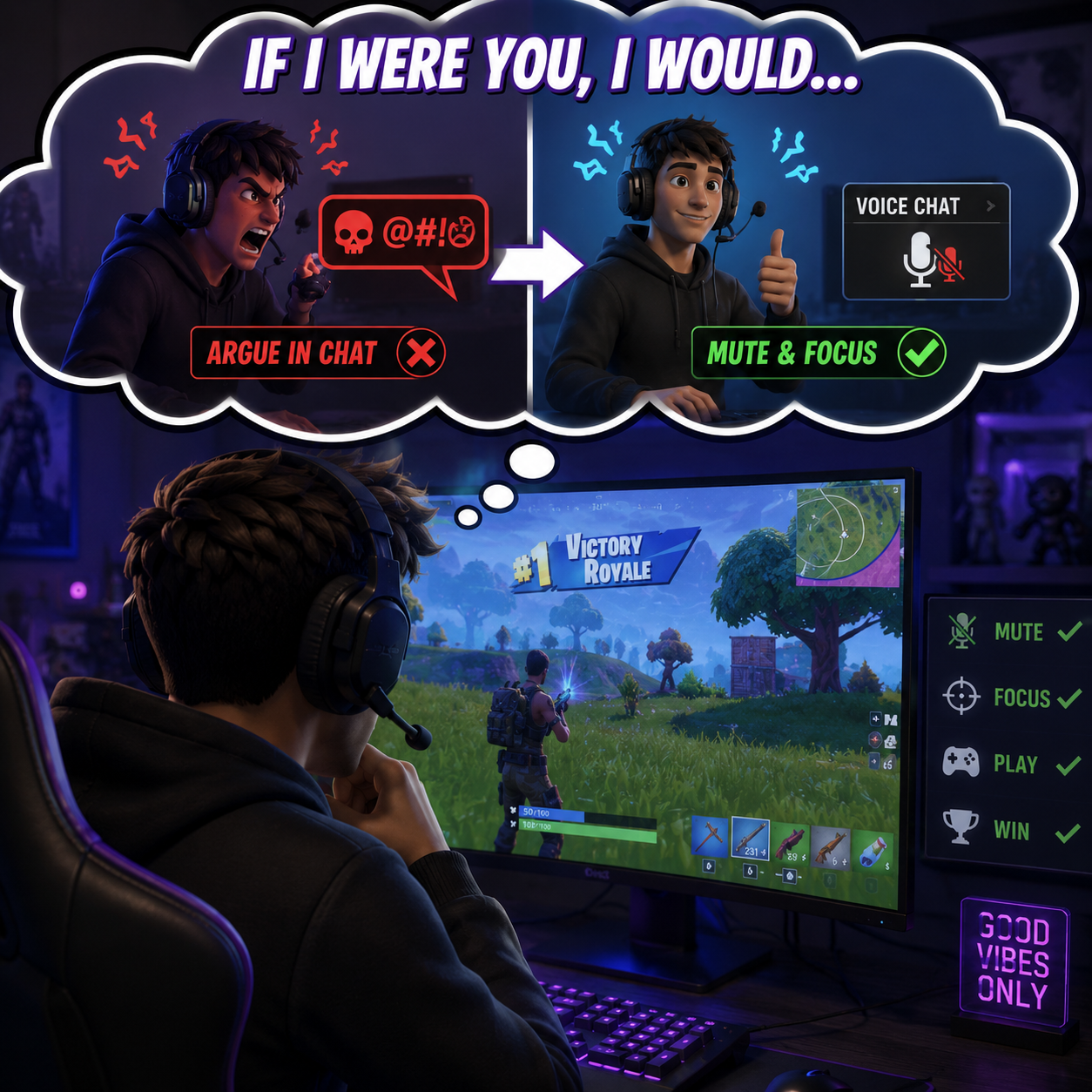
Use this to give advice in a gentle, hypothetical way — you're imagining yourself in their position. It softens the suggestion so it doesn't sound like a command, even in a heated gaming moment.
"If I were you, I would just mute them and focus on the game — arguing in chat never helps anyone."
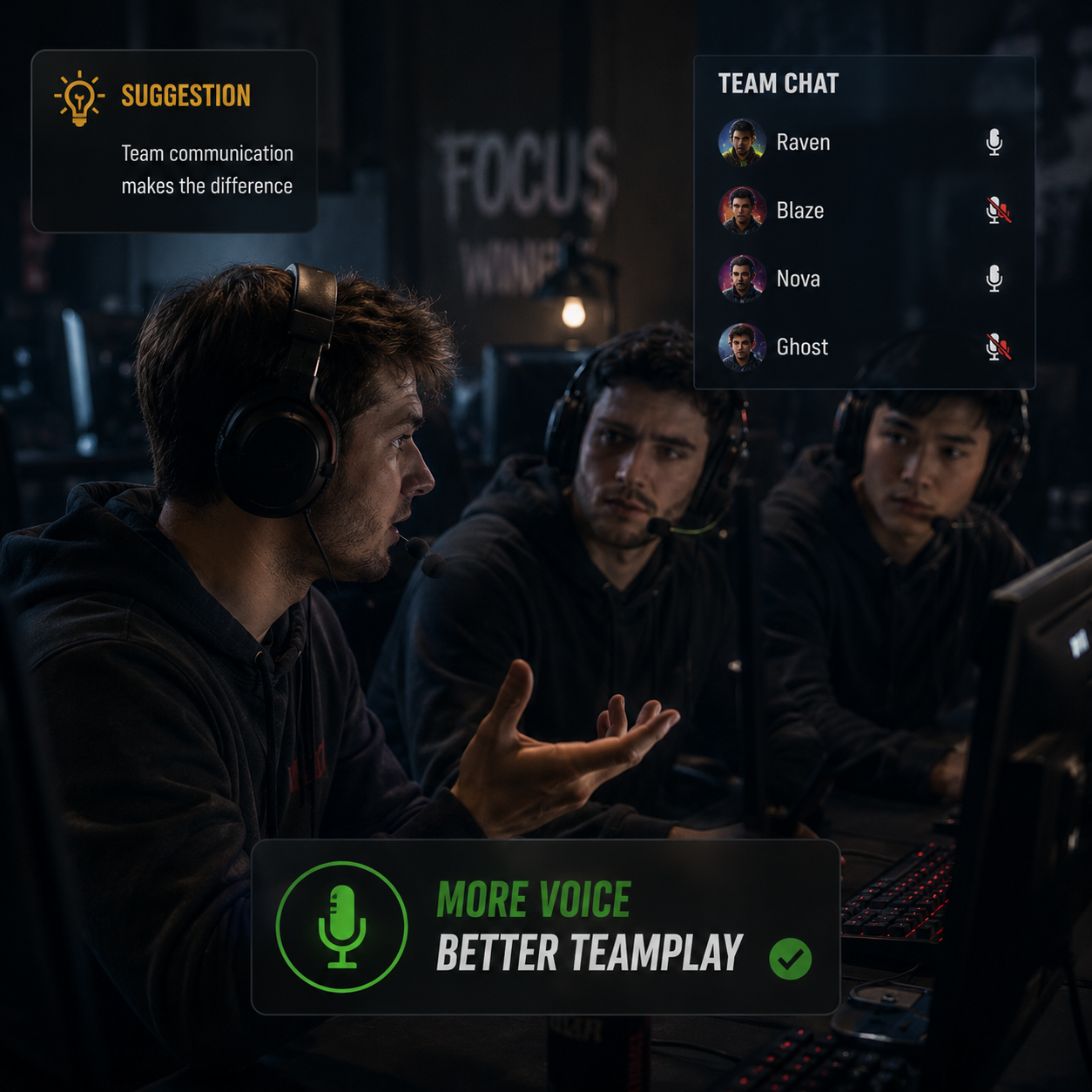
A diplomatic way to say what could improve a situation — without pointing blame at one person. The second conditional makes it feel like an observation rather than a demand. Useful when the whole team needs to change something.
"It would help if everyone used voice chat — we keep missing callouts because nobody is communicating."
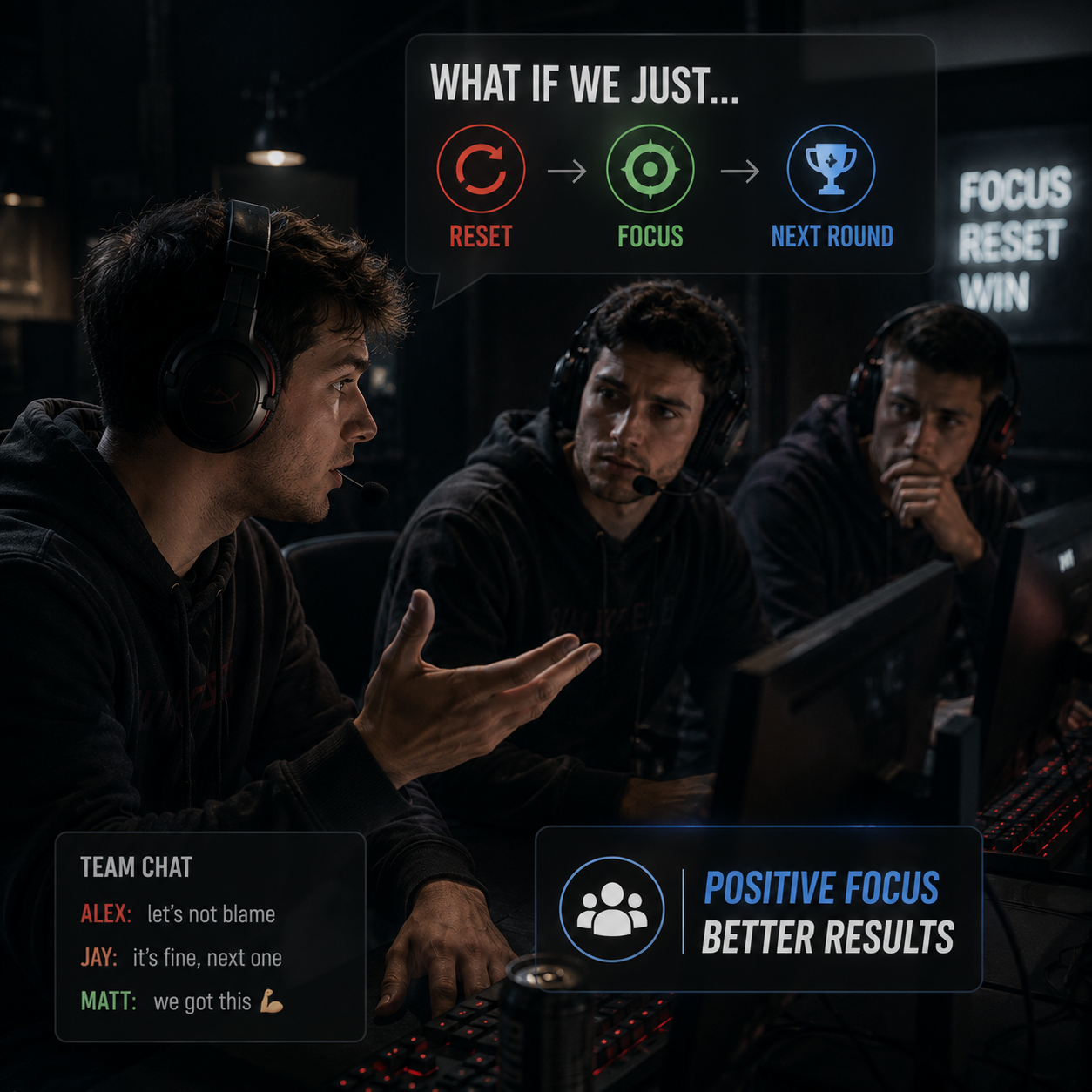
Use this to propose an alternative and shift focus away from the conflict. It's a de-escalation tool — you're not telling anyone they're wrong, you're simply pointing toward something more productive.
"What if we just reset and focus on the next round instead of blaming each other for that loss?"
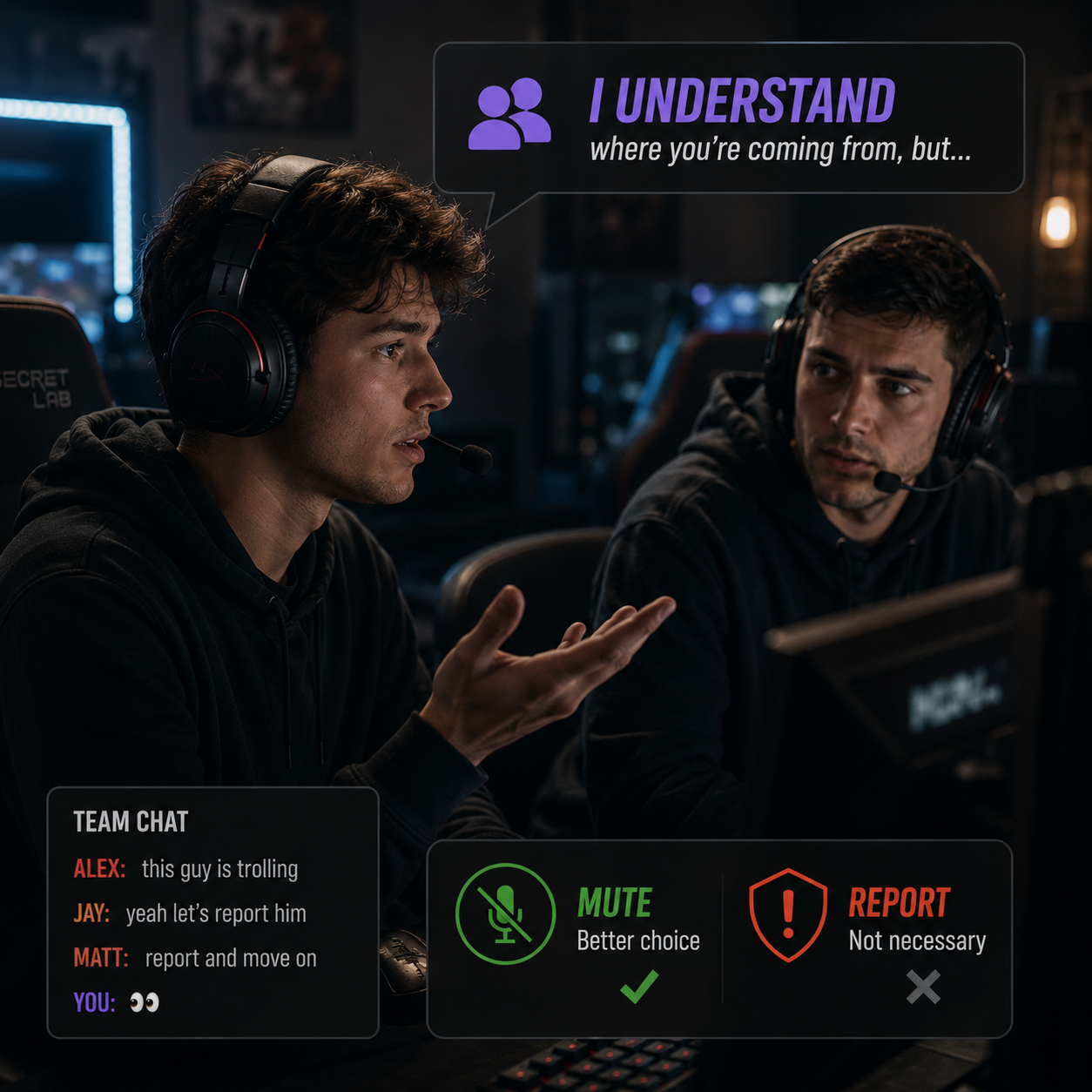
The foundation of respectful debate — acknowledge someone's point before you disagree. It shows you listened, even when you don't agree. This phrase immediately lowers the temperature in any argument.
"I understand where you're coming from, but muting is better than reporting here — they didn't actually break any rules."
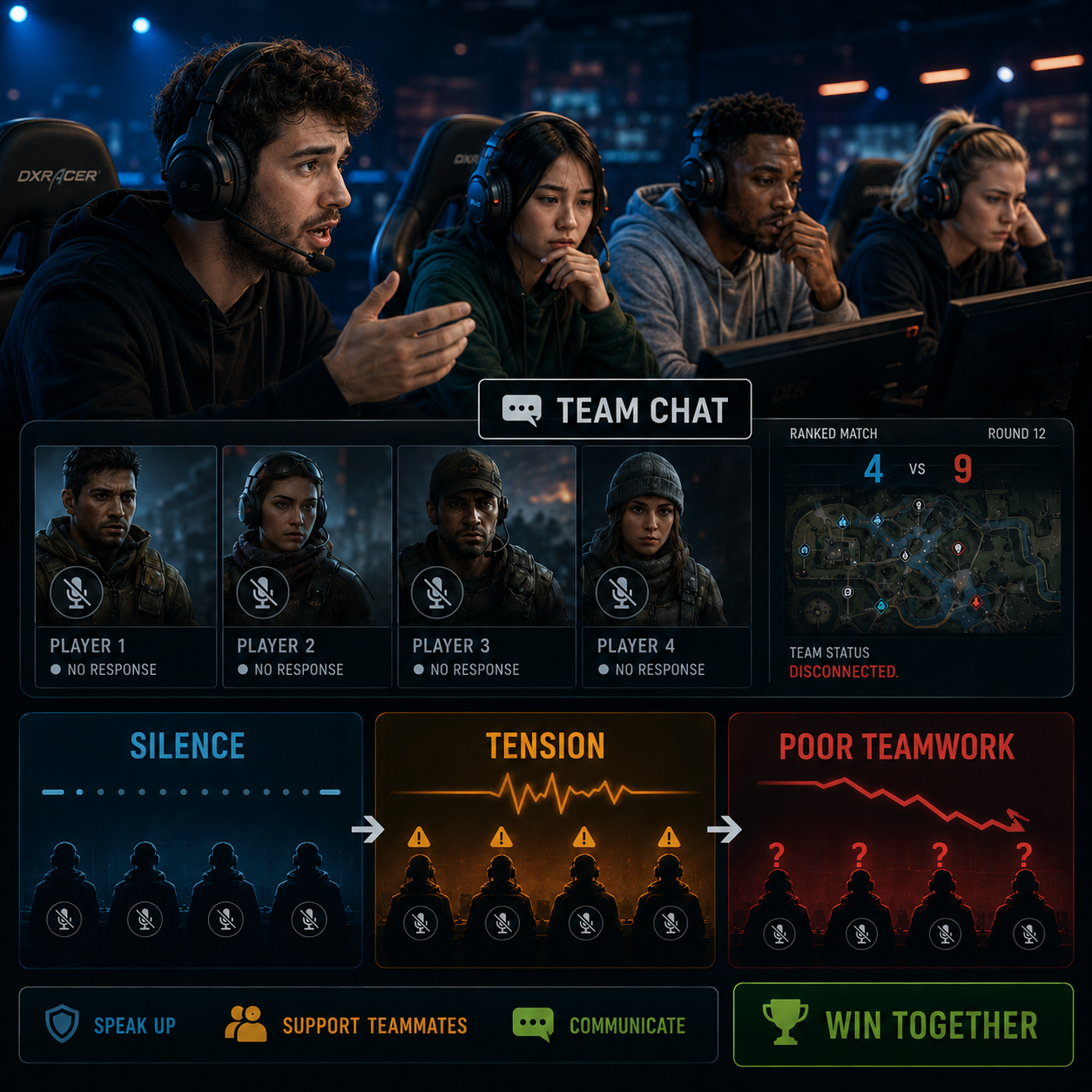
Introduces your argument clearly and signals you're sharing a personal view — not stating a fact. The word "real" adds emphasis without aggression. Essential in any debate about gaming culture, bans, or team behaviour.
"In my opinion, the real issue is that toxic behaviour goes unchallenged — people stay silent and it gets worse."
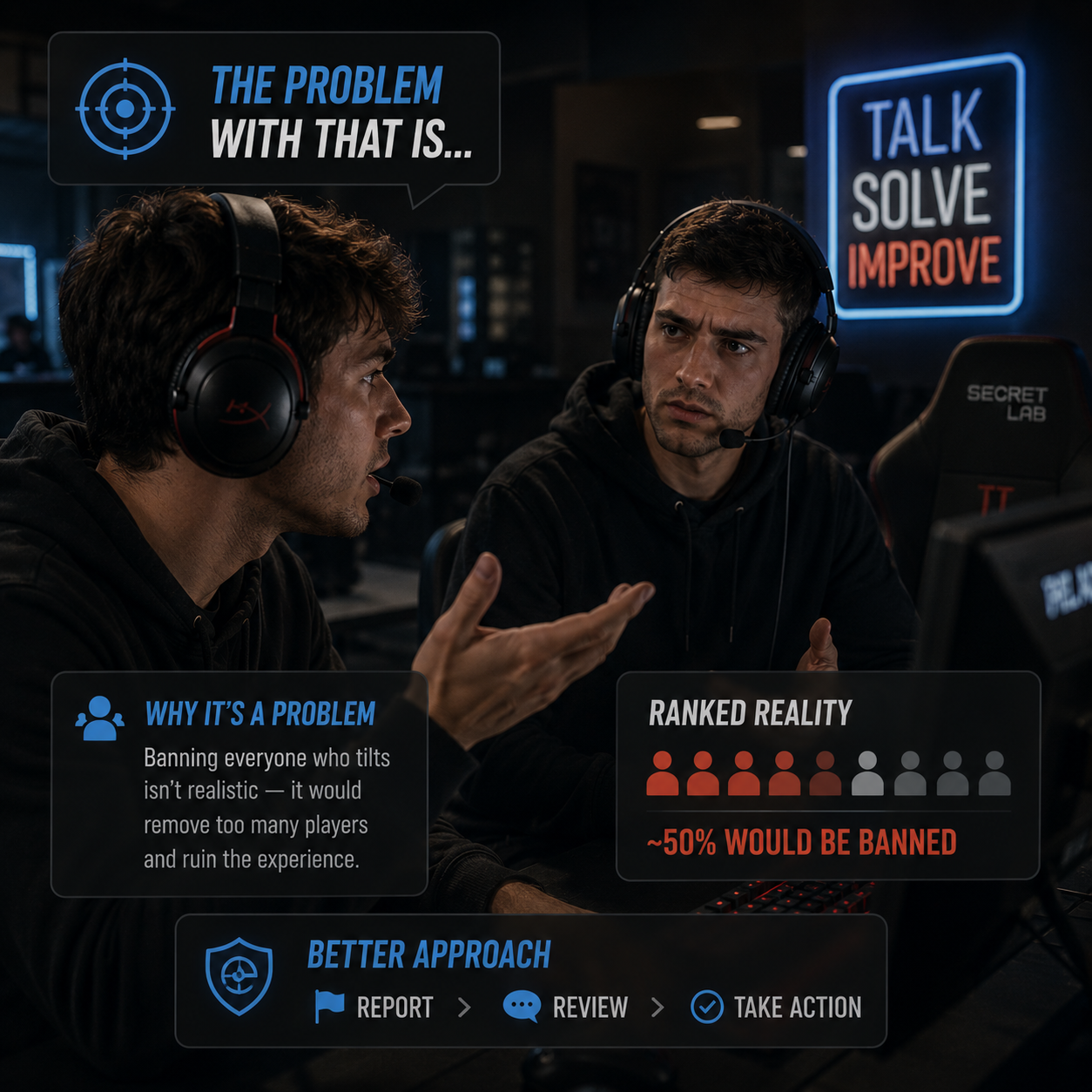
Use this to find a flaw in someone else's argument. It sounds direct but not aggressive — you're criticising the idea, not the person. A key debate skill that works in gaming communities, forums, and voice chat.
"The problem with that is you can't just ban every player who tilts — half the ranked lobby would be gone."
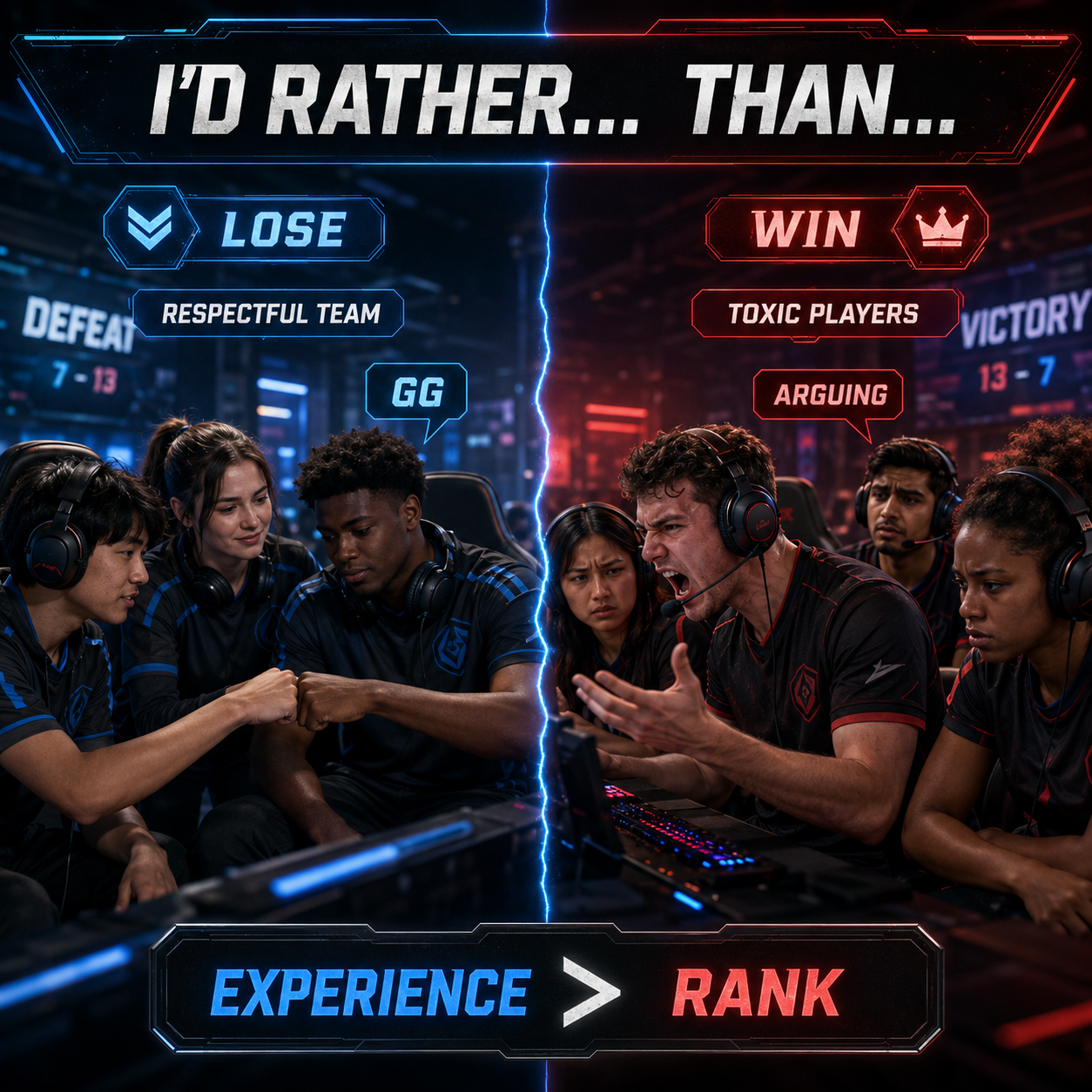
Compares two options and makes your choice clear. Strong in debates because it shows you've considered both sides before deciding. In gaming, it's often used to explain a play style or stance on toxicity.
"I'd rather lose with a respectful team than win with toxic players — the experience matters more than the rank."
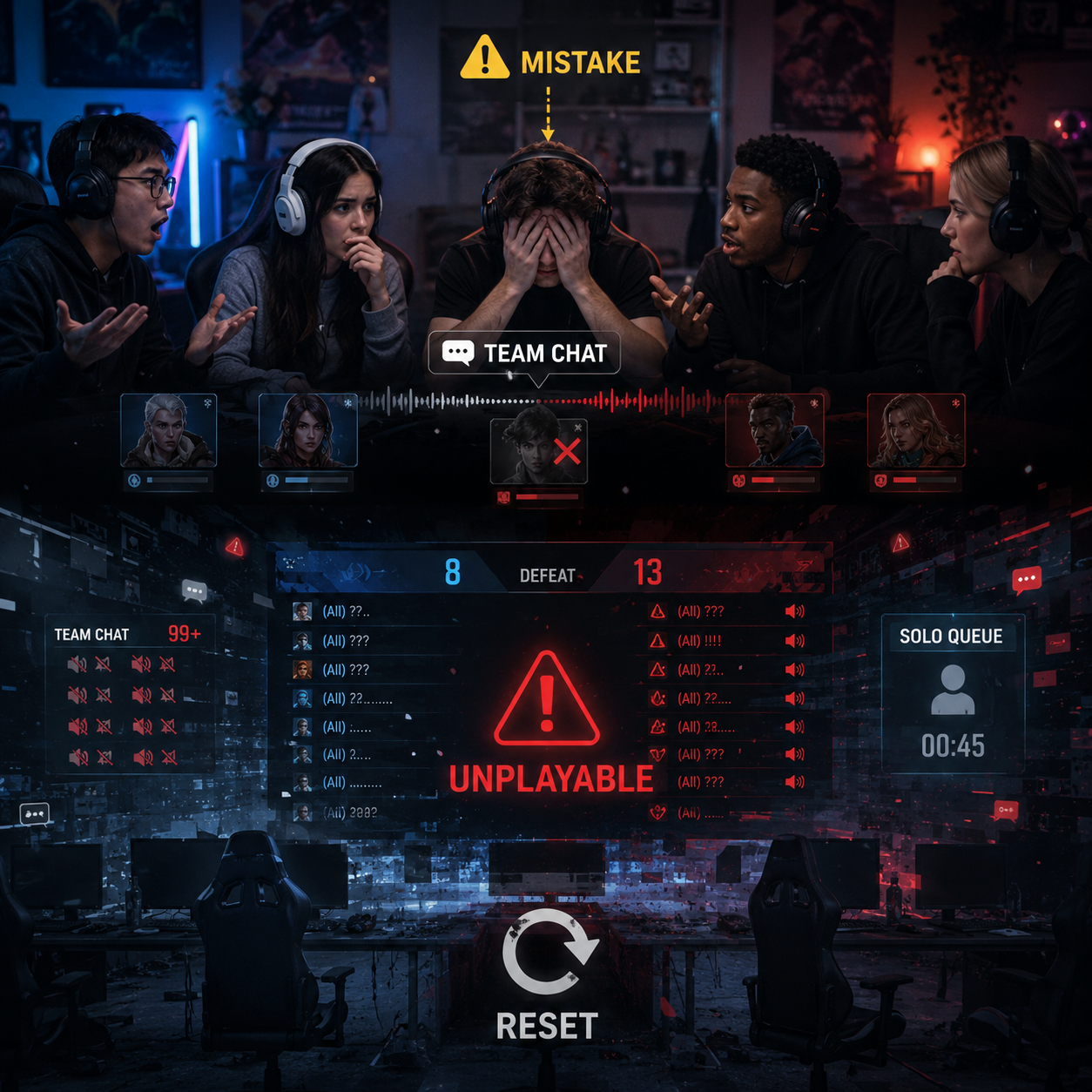
Use the second conditional to imagine what would happen if a behaviour became widespread. Powerful in debates because it shows the bigger picture — moving from one person's actions to the impact on the whole community.
"If everyone flamed their teammates after a mistake, ranked would be unplayable — nobody would want to solo queue."
💡 Grammar Focus — The Second Conditional
The second conditional is about hypothetical situations — things that are imaginary, unlikely, or not currently true. It's NOT about the past, even though it uses past tense verbs. This is one of the most common points of confusion.
The Pattern
If + past simple, would + infinitive"If I were you, I would mute them.""If everyone communicated, ranked would be better.""Were" vs "Was" — the rule
were for ALL subjects in second conditionals."If I were in your position…""If she were less toxic…""If it were that simple…"More gaming examples — study the pattern
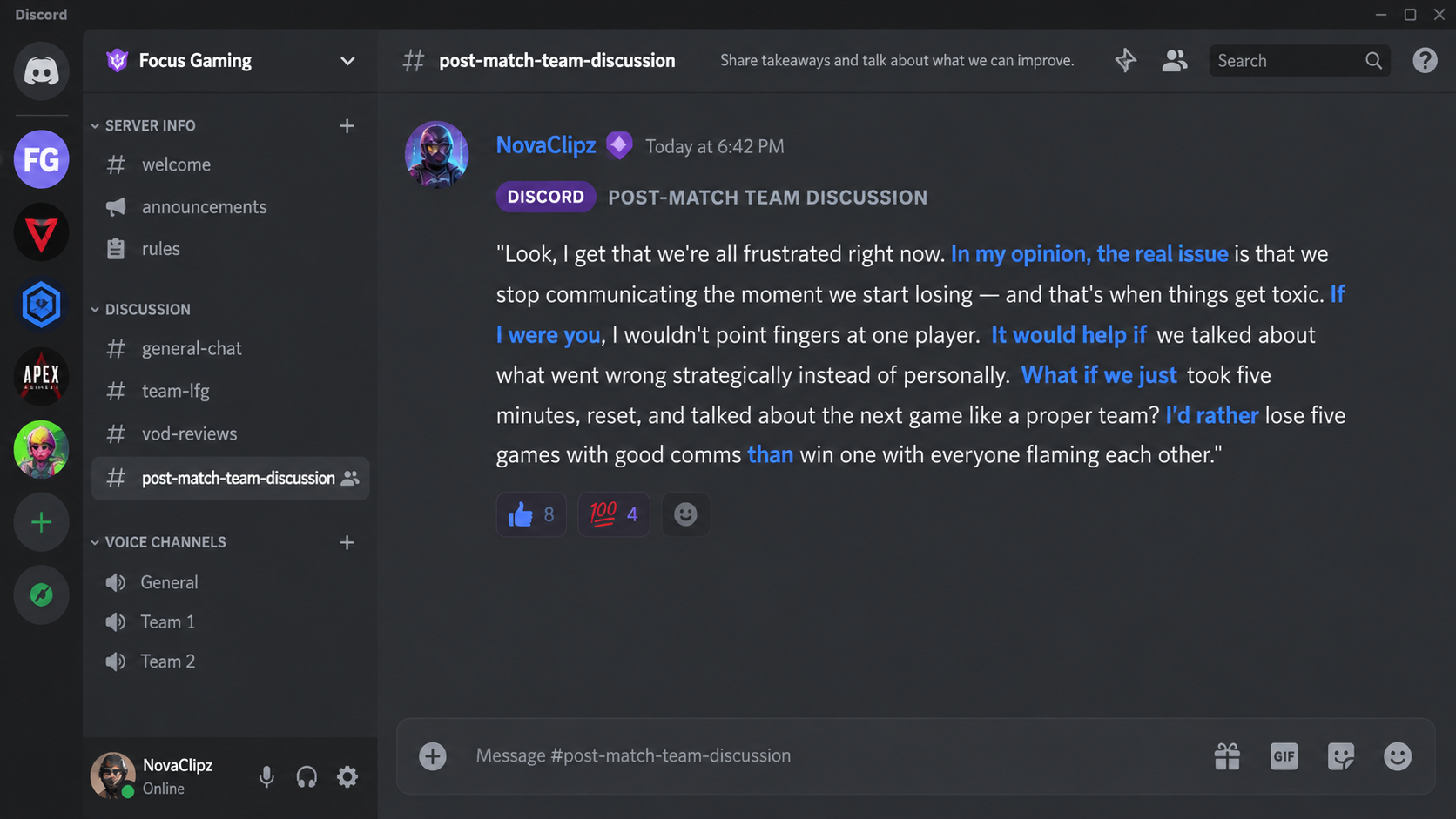
"Look, I get that we're all frustrated right now. In my opinion, the real issue is that we stop communicating the moment we start losing — and that's when things get toxic. If I were you, I wouldn't point fingers at one player. It would help if we talked about what went wrong strategically instead of personally. What if we just took five minutes, reset, and talked about the next game like a proper team? I'd rather lose five games with good comms than win one with everyone flaming each other."
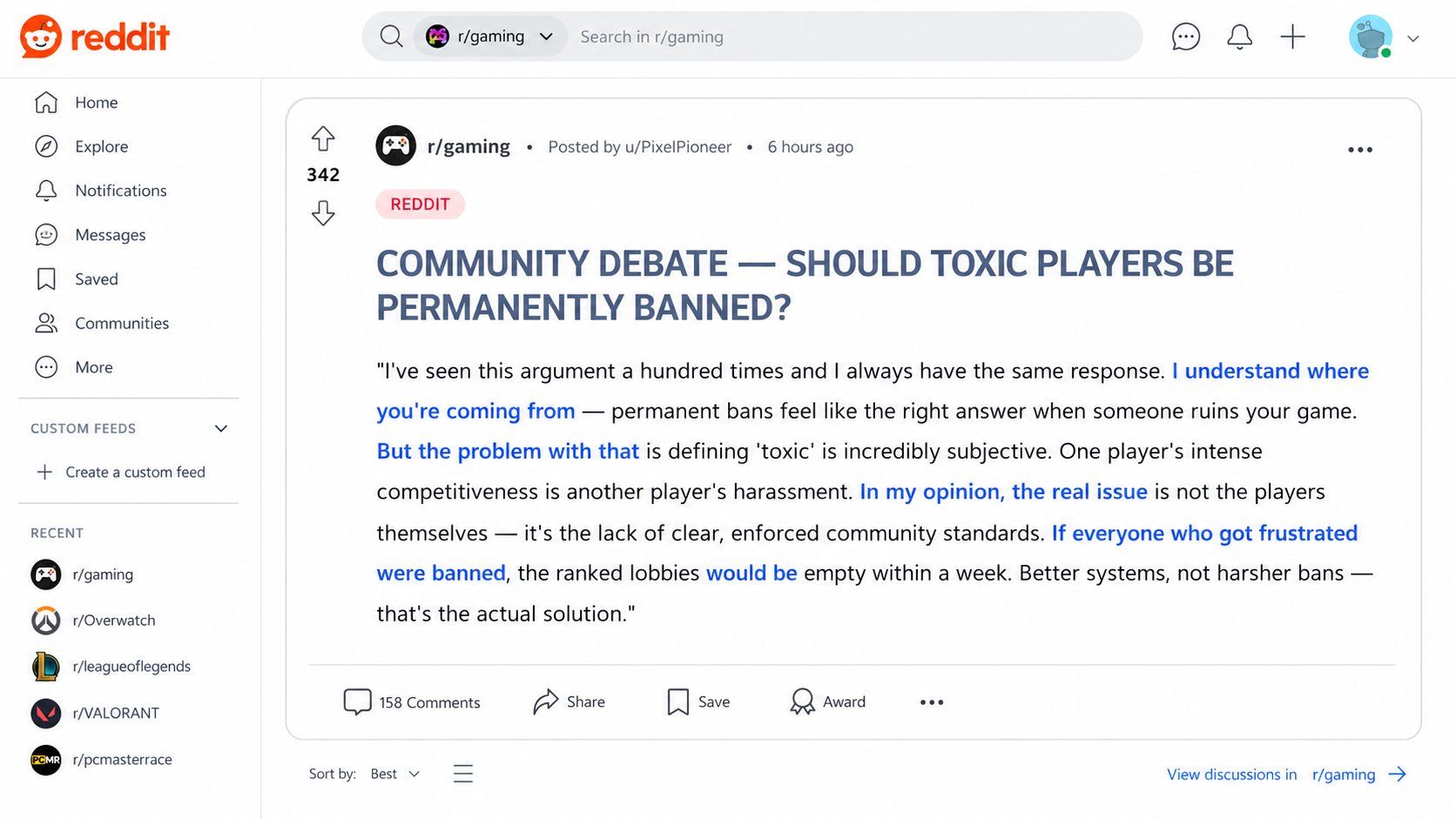
"I've seen this argument a hundred times and I always have the same response. I understand where you're coming from — permanent bans feel like the right answer when someone ruins your game. But the problem with that is defining 'toxic' is incredibly subjective. One player's intense competitiveness is another player's harassment. In my opinion, the real issue is not the players themselves — it's the lack of clear, enforced community standards. If everyone who got frustrated were banned, the ranked lobbies would be empty within a week. Better systems, not harsher bans — that's the actual solution."
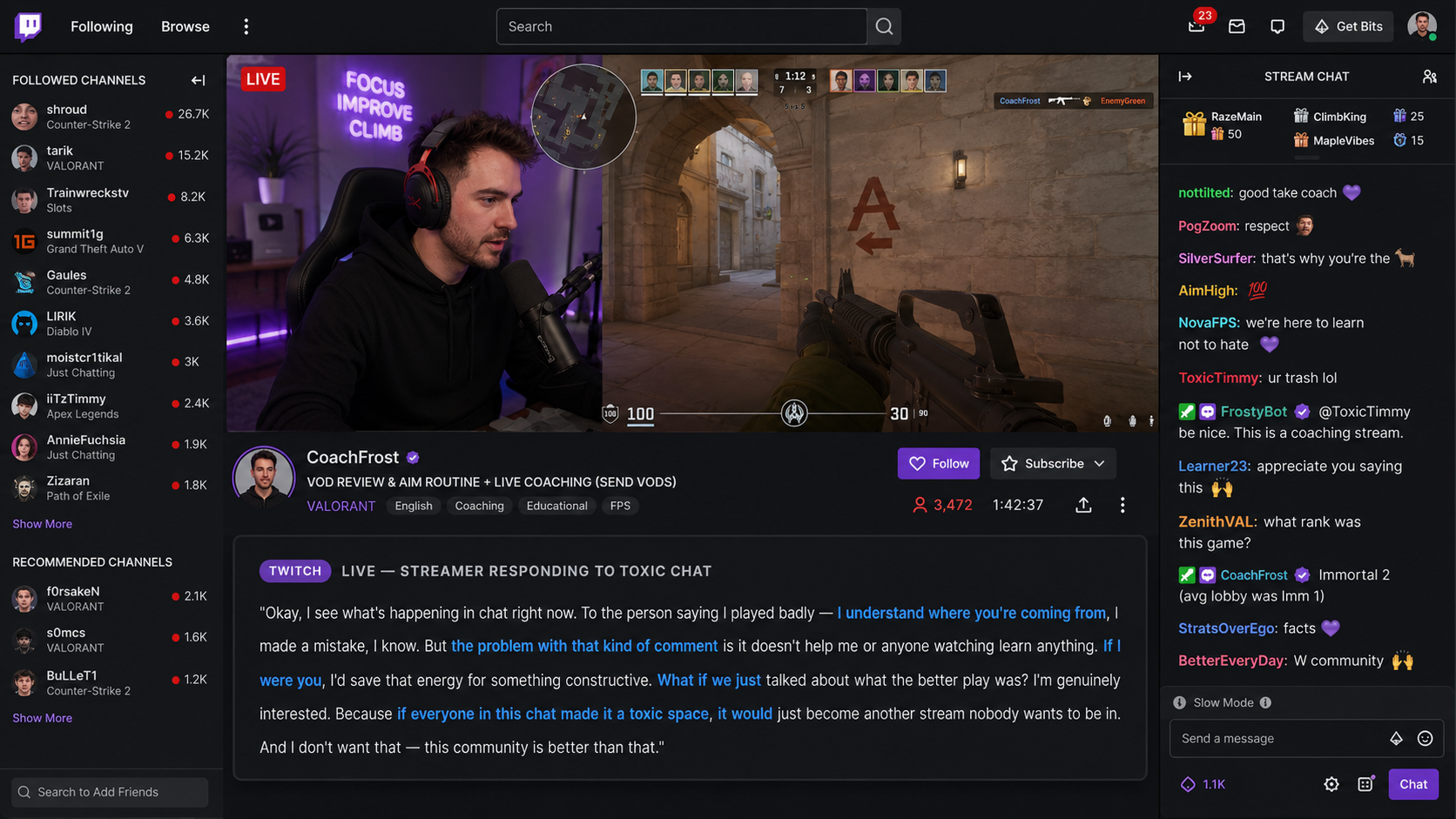
"Okay, I see what's happening in chat right now. To the person saying I played badly — I understand where you're coming from, I made a mistake, I know. But the problem with that kind of comment is it doesn't help me or anyone watching learn anything. If I were you, I'd save that energy for something constructive. What if we just talked about what the better play was? I'm genuinely interested. Because if everyone in this chat made it a toxic space, it would just become another stream nobody wants to be in. And I don't want that — this community is better than that."
| Context | Register | Example |
|---|---|---|
| In-game chat (mid-match) Instant reaction, high emotion |
Informal / Raw | "bro just mute them wtf why are you still arguing" |
| Voice chat (team debrief) Post-match, still emotional |
Informal / Direct | "Look, if I were you I'd just let it go — it would help if we focused on what we can actually control." |
| Discord server (team channel) Written, more considered |
Neutral / Constructive | "I understand where you're coming from, but in my opinion the real issue is how we communicate under pressure." |
| Gaming forum / Reddit Public debate, wider audience |
Neutral / Analytical | "The problem with permanent bans is the lack of clear standards. If the system were more transparent, enforcement would be fairer." |
| Formal report / Complaint Platform support, official channel |
Formal / Professional | "I would like to report repeated harassment in my match history. The behaviour described would constitute a violation of community guidelines." |
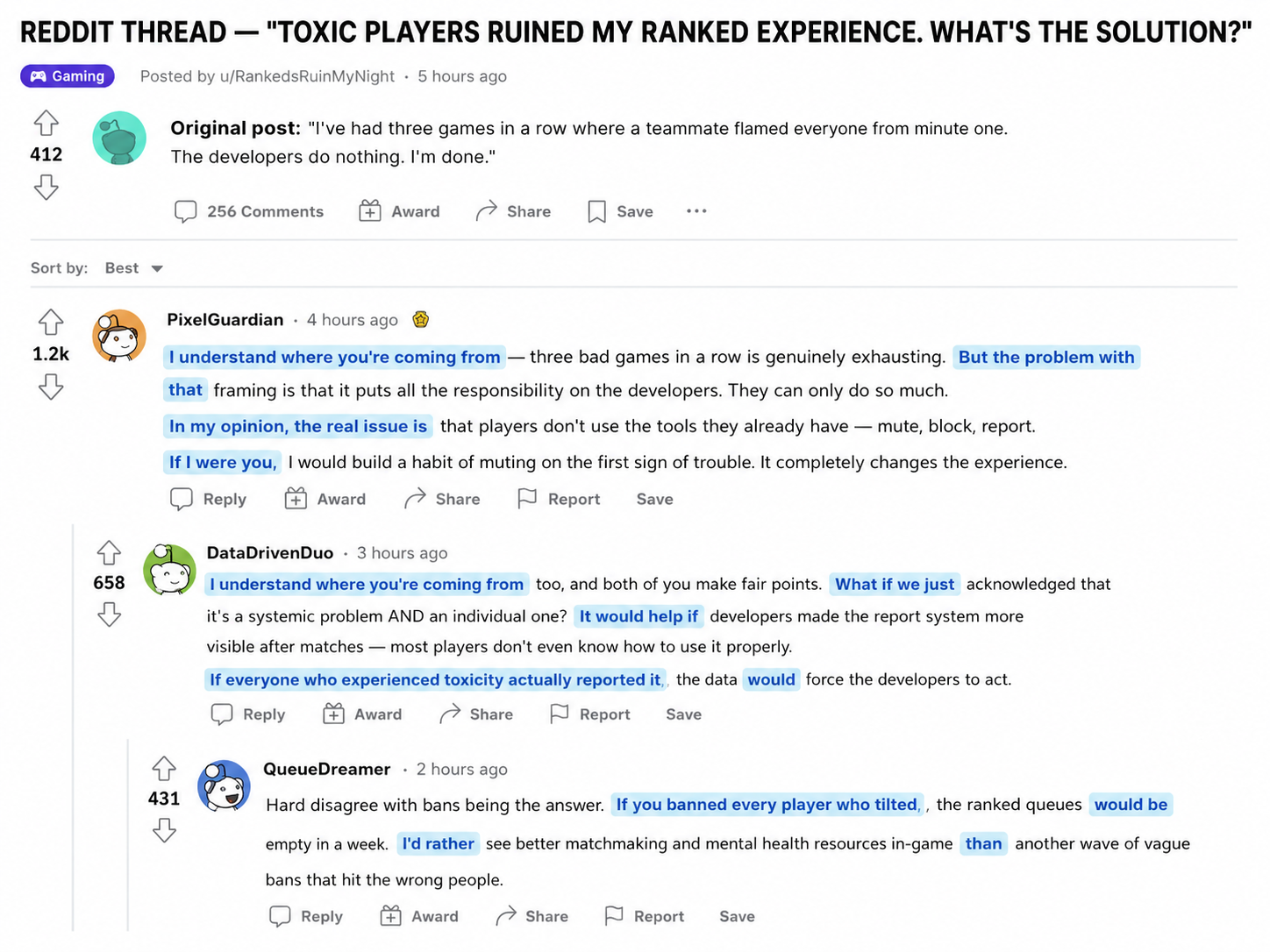
Original post: "I've had three games in a row where a teammate flamed everyone from minute one. The developers do nothing. I'm done."
Reply 1 (Top comment): "I understand where you're coming from — three bad games in a row is genuinely exhausting. But the problem with that framing is that it puts all the responsibility on the developers. They can only do so much. In my opinion, the real issue is that players don't use the tools they already have — mute, block, report. If I were you, I would build a habit of muting on the first sign of trouble. It completely changes the experience."
Reply 2: "I understand where you're coming from too, and both of you make fair points. What if we just acknowledged that it's a systemic problem AND an individual one? It would help if developers made the report system more visible after matches — most players don't even know how to use it properly. If everyone who experienced toxicity actually reported it, the data would force the developers to act."
Reply 3: "Hard disagree with bans being the answer. If you banned every player who tilted, the ranked queues would be empty in a week. I'd rather see better matchmaking and mental health resources in-game than another wave of vague bans that hit the wrong people."
Comprehension Questions
Think about why each phrase is used — not just what it means.
Calm the Team
After a bad ranked loss, one teammate is blaming everyone. You're the team captain. Speak for 60–90 seconds — de-escalate the situation, redirect the team, and set the tone for the next game. Use the phrases naturally.
Debate: Permanent Bans
Your partner argues: "Toxic players should be permanently banned after three reports." Disagree and build a counter-argument using at least three phrases from the lesson. Then swap — your partner counters your position.
Write a Reply
Someone in your team's Discord writes: "If you don't carry, you deserve to get flamed." Write a 4–5 sentence reply using the scaffold below. Then read it aloud to your partner.
✍️ Reply Scaffold — Option C
e.g. "I understand where you're coming from — losing feels awful when…"
e.g. "The problem with that is…"
e.g. "If everyone flamed teammates who struggled, the game would…"
e.g. "I'd rather… than…"
Useful reminders while you speak or write
- Always acknowledge before you counter — it makes your argument stronger, not weaker.
- Use "In my opinion, the real issue is…" when you want to reframe the whole debate around your point.
- Second conditionals signal that you've thought beyond the immediate situation — use them when making bigger-picture arguments.
- "I'd rather… than…" is powerful because it shows you considered both options before choosing. It sounds balanced and confident at the same time.
Match the Phrase to Its Function
Click a phrase on the left, then click the matching function on the right.
Complete the Sentence
Click a phrase from the bank, then click the blank where it belongs.
Correct or Incorrect?
Each sentence may have a second conditional error. Is it correct or not?