
8 key words for talking strategy
01
CALLOUT
NOUN / VERB
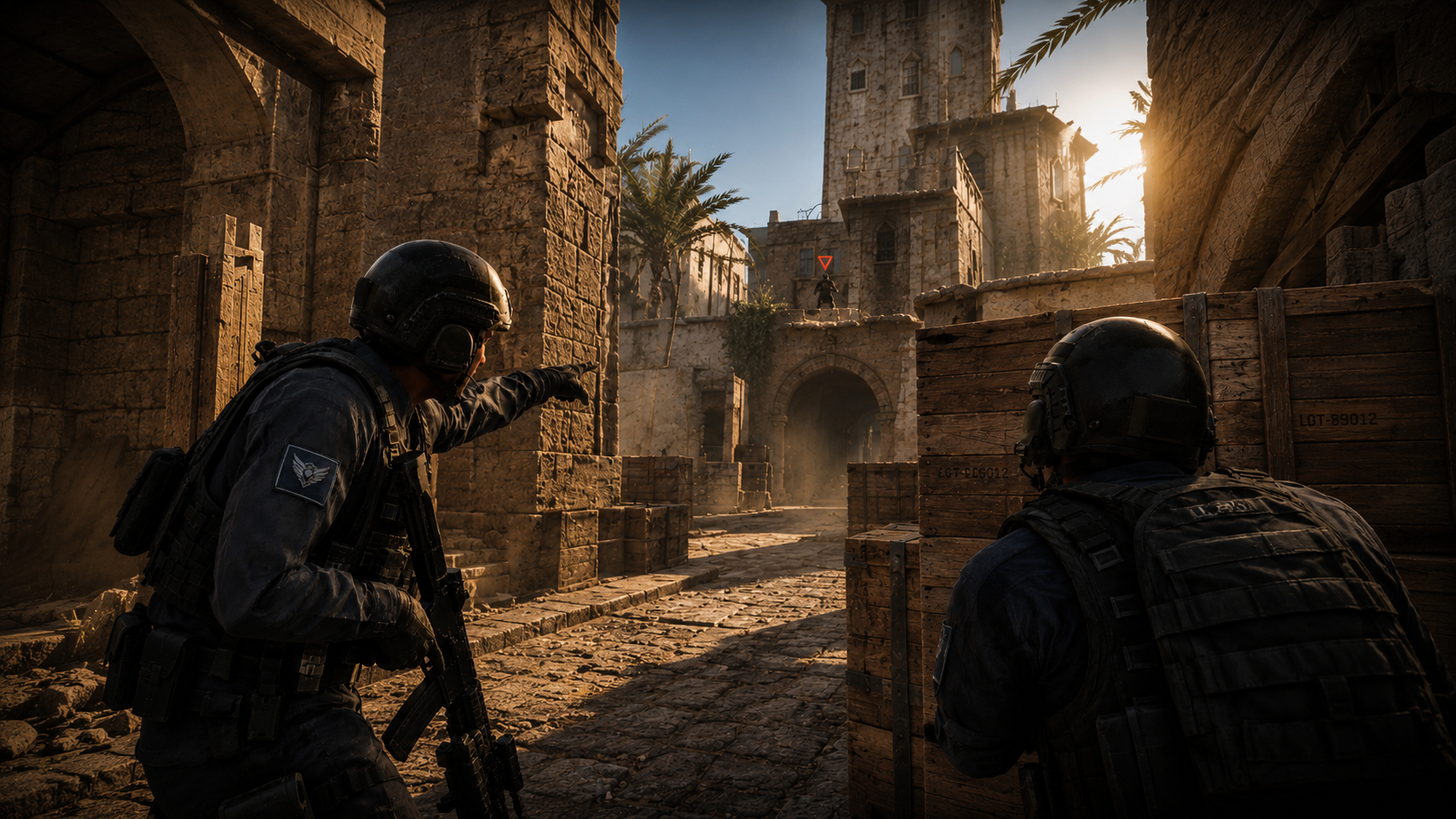
Information you say out loud to tell your team where an enemy is — the name of the location, the number of enemies, and what they are doing. Good callouts win rounds.
EXAMPLE
"Two enemies at B site — one pushing from short, one holding the corner."
▶
Word
▶
Example
02
STRATEGY
NOUN
The overall plan for how your team is going to win — not one action, but the approach that connects all your decisions together. Teams without a strategy react. Teams with one act.
EXAMPLE
"Our strategy is to take mid control first — everything else depends on that."
▶
Word
▶
Example
UNCOVER
03
UNCOVER
VERB
To find out where the enemy is — by forcing them to reveal themselves, using information from a teammate, or creating pressure that makes them move. Uncovering positions is the first step in most strategies.
EXAMPLE
"Throw a smoke so we can uncover who is holding that angle — I need to know before we push."
▶
Word
▶
Example
ANCHOR
04
ANCHOR
VERB / NOUN
To hold a fixed position and control an area while your team moves elsewhere. The anchor player stays, keeps the enemy occupied, and makes space for teammates to work. Without an anchor, defences collapse.
EXAMPLE
"You anchor B — keep them busy and tell me if they rotate. We will take A while they are focused on you."
▶
Word
▶
Example

05
COORDINATE
VERB
To organise teammates so that multiple people act together at exactly the right moment. A coordinated push hits from two sides at once. An uncoordinated one arrives one player at a time — and loses.
EXAMPLE
"We need to coordinate — on my count, you push from the left and I will come from the right."
▶
Word
▶
Example

06
FLANK
VERB / NOUN
To attack from the side or from behind — hitting enemies who are facing a different direction. A flank creates confusion, forces enemies to split their attention, and often results in fast, clean eliminations.
EXAMPLE
"Keep them distracted at the front — I am going around to flank. They will not expect it."
▶
Word
▶
Example
07
PUSH FORWARD
PHRASAL VERB
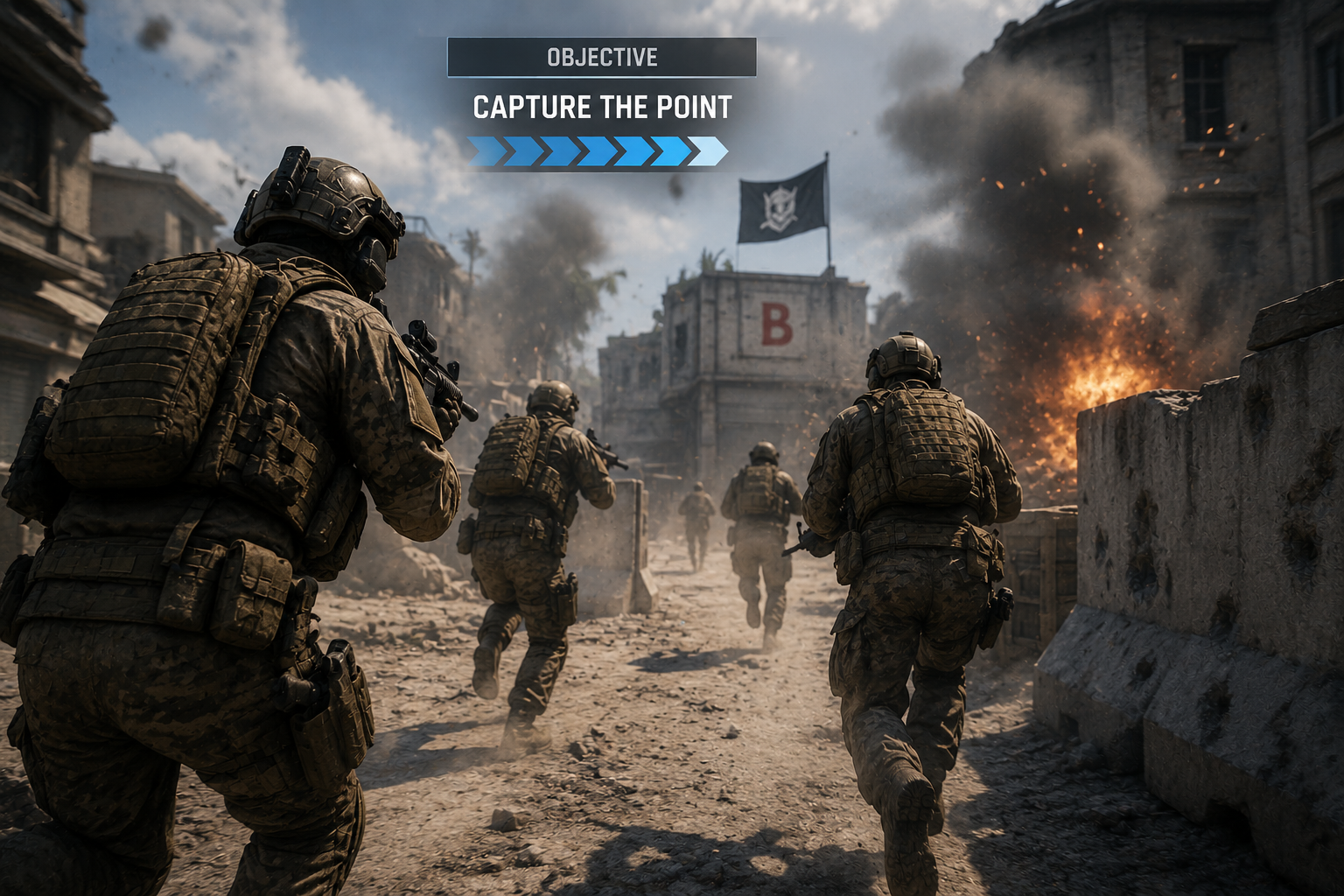
To advance aggressively toward the enemy — taking space, applying pressure, and forcing them to react. Knowing when to push forward (and when not to) is one of the most important timing decisions in any game.
EXAMPLE
"Now — push forward while they are reloading. We have a three-second window."
▶
Word
▶
Example
08
ROTATE
VERB
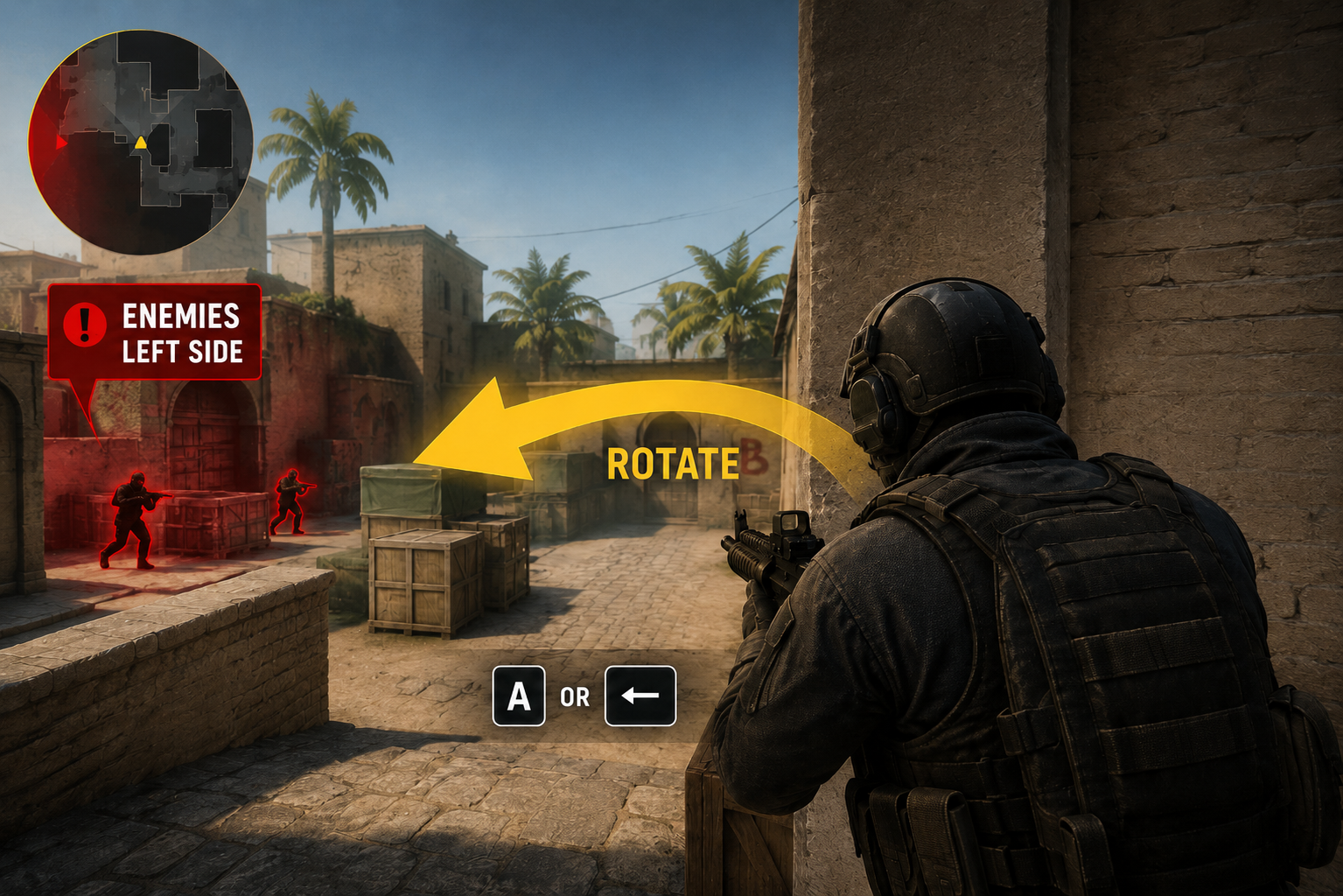
To move quickly from one area of the map to another in response to new information — usually to reinforce a teammate, cut off an enemy, or reposition before it is too late. Good rotations save rounds.
EXAMPLE
"A site is clear — rotate to B now. They are planting."
▶
Word
▶
Example
8 strategy phrases for this lesson
⚡ Quick Grammar Reminder
should = strong advice
could = softer suggestion
might = uncertain warning
can / can't = ability or ruling out
Modal verbs (should / could / might / can) go before the main verb and show how strong or certain your idea is.
If-sentences: If + present tense, will/won't + action
→ "If we push now, we'll catch them."
⚠ The if-part is always present tense — never "if we will push."
See the phrases in real gaming conversations
💡 Notice: Each highlighted phrase shows a different level of certainty or strength. Can you feel the difference between might, should, and can't?
How the same phrases change across different gaming contexts
| Context | Register | Example |
|---|
Ranked Match Comms — Final Three Rounds
💡 Study tip: Every highlighted phrase comes from the Phrases tab. Can you spot all 8 being used naturally?
Comprehension Questions — answer before moving to Exercises
Context: Mike, Judy, and Alex are in the final three rounds of a ranked match, planning their moves under pressure.
Choose a scenario and practise with a partner. Use at least 4 phrases.
💬 How to sound natural
Complete all three exercises to finish the lesson
Match the Phrase to Its Job
Click a phrase on the left, then click the correct job description on the right.
0/6 matched
👆 Click a phrase, then click its function.
Phrase
Its Job
🏆
All matched! You know your phrases!
Complete the Sentence
Choose the correct phrase from the bank for each blank.
👆 Click a phrase from the Word Bank, then click the blank. Click a filled blank to return the phrase.
PHRASE BANK
Correct or Incorrect?
Identify the error in each sentence — or confirm it's already correct.
💡 Discussion Questions — Talk about these with your partner or teacher: