









Practispeak

Esports as a Profession

C1–C2Advanced
0%
Gamingenglish

Learning Objectives

In this lesson you will:

  • Learn the key vocabulary with audio and examples
  • Study the grammar and structures behind the lesson
  • See the language used in realistic situations
  • Compare formal, neutral, and informal register
  • Test yourself with interactive exercises
Vocabulary
8 words for talking about what it actually takes to build — and survive — a career in competitive gaming
lucrative
01
lucrative
adjective · producing a lot of money
often paired with: lucrative deal, lucrative career, lucrative sponsorship
Describes something that brings in a lot of money — often used about jobs, deals, or opportunities that look appealing mainly because of the income involved. Ex: A handful of streamers turn their channel into a surprisingly lucrative business.
Example
"Top-tier esports can be genuinely lucrative — but only for the small fraction of players who ever make it that far."
burnout
02
burnout
noun · complete exhaustion from prolonged stress
often paired with: hit burnout, suffer from burnout, recover from burnout
A state of total physical and mental exhaustion that builds up slowly after a long period of pressure or overwork — to the point where you can barely function, let alone perform. Ex: After months of back-to-back tournaments, burnout finally caught up with him.
Example
"After three years of ten-hour scrim days, she said the burnout crept up on her so slowly she didn't notice it until she couldn't get out of bed."
longevity
03
longevity
noun · the ability to last a long time
often paired with: career longevity, longevity in the scene, focus on longevity
How long something — especially a career — manages to last, especially when that's seen as difficult or unusual to achieve. Ex: Few players talk about longevity, because so few of them get to experience it.
Example
"Coaches talk a lot about mechanical skill, but almost nobody talks about longevity — how to still be playing, and enjoying it, five years from now."
scholarship
04
scholarship
noun · funding awarded based on merit
often paired with: full scholarship, turn down a scholarship, esports scholarship program
Money given to someone — often by a university — to help pay for their education, usually awarded because of their academic record, talent, or (increasingly) their gaming skill. Ex: More universities now offer scholarships specifically for competitive gamers.
Example
"She turned down a full scholarship to chase a roster spot, and to this day she still isn't sure she made the right call."
sponsorship
05
sponsorship
noun · financial support in exchange for promotion
often paired with: landed a sponsorship, sponsorship deal, lose a sponsorship
An arrangement where a company provides money or products to a player or team, usually in return for the player promoting that brand to their audience. Ex: The team's jerseys are covered in logos from their sponsorship deals.
Example
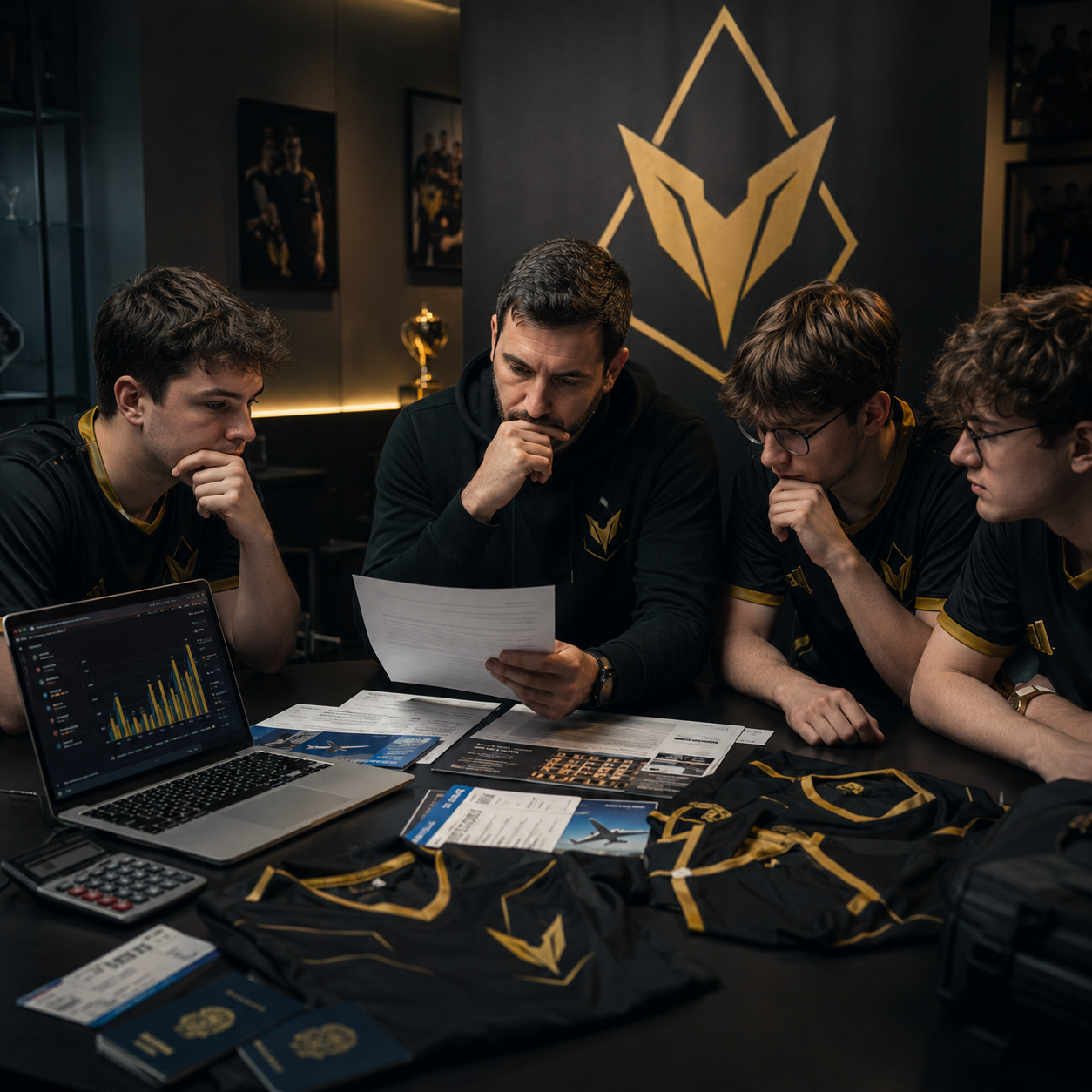
"The team's entire travel budget depends on a single sponsorship deal that's up for renewal next month."
underdog
06
underdog
noun · a competitor expected to lose
often paired with: the underdog story, root for the underdog, come from behind as an underdog
A person or team that almost everyone expects to lose, usually because they're less experienced, less funded, or simply less well-known than the competition. Ex: The whole arena was rooting for the underdog by the final round.
Example
"Nobody expected the underdog squad to even make it out of groups, let alone walk away with the trophy."
roster
07
roster
noun · the official list of team members
often paired with: roster change, starting roster, make the roster
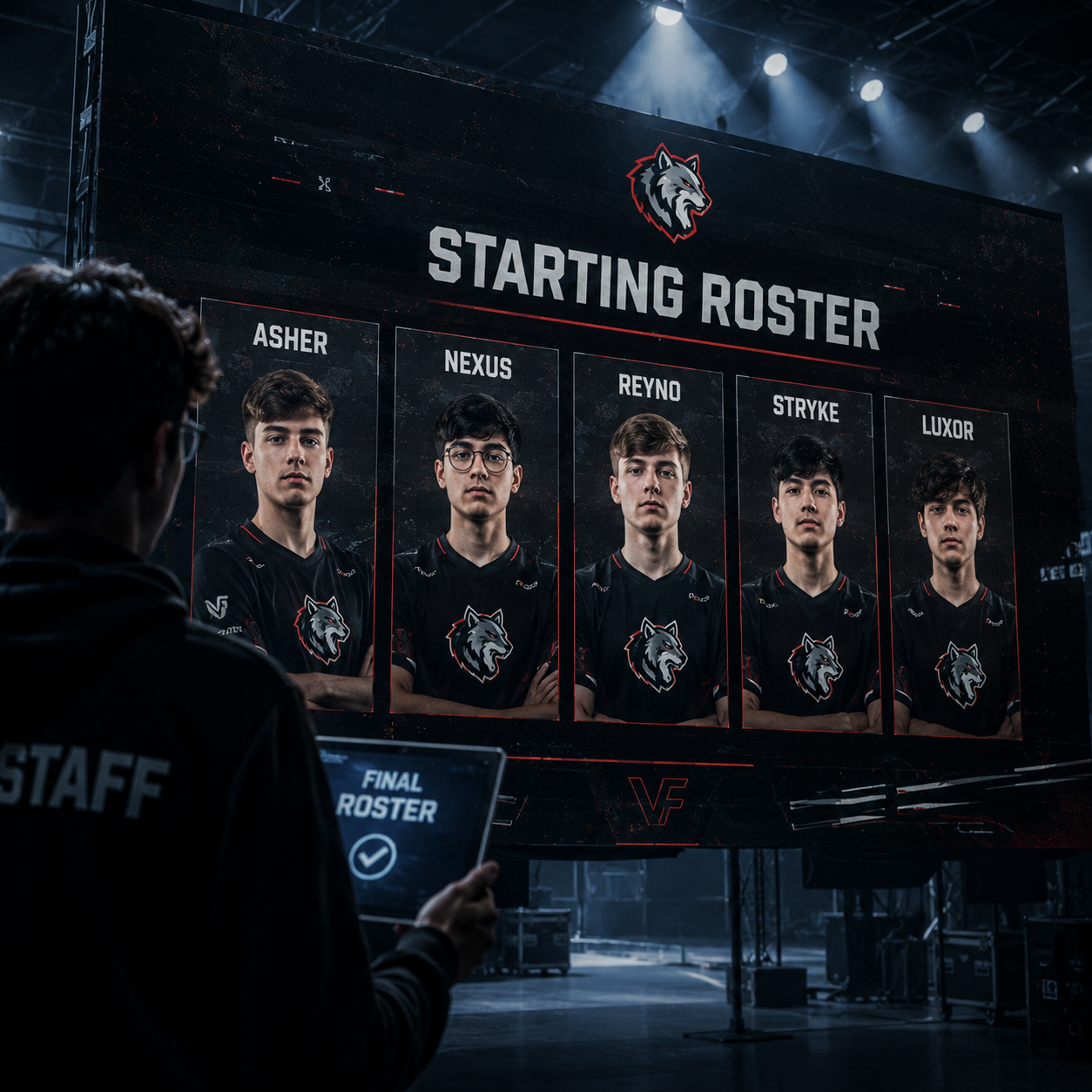
The official list of players who make up a team at a given time — who's in, who's out, and who's actually allowed to compete. Ex: The org confirmed its starting roster just hours before the opening match.
Example
"The org announced a complete roster overhaul this morning, and three players found out about it on social media before anyone called them directly."
washed-up
08
washed-up
adjective · informal · no longer successful, past one's prime
often paired with: called washed-up, feel washed-up, written off as washed-up
An informal — and often unkind — way of describing someone who used to be successful but is now seen as finished, especially when that label gets handed out far too early. Ex: It feels brutal to call someone "washed-up" before they've even turned twenty-five.
Example
"Fans can be brutal — one bad season and suddenly people are calling a twenty-three-year-old 'washed-up.'"
Language Focus
8 conditional patterns for talking about real possibilities, hypotheticals, regrets, and the formal register that drops "if" altogether
If present present
01
"If + present, + present"
Zero Conditional — General Truths
Used for things that are generally or always true — cause and effect that doesn't depend on any particular situation. Both halves stay in the present tense, and "if" can usually be swapped for "when" without changing the meaning.
Example
"If a player loses focus mid-match, the whole team usually pays for it."
If present will base verb
02
"If + present, will + base verb"
First Conditional — Real Future Possibility
Used for things that are genuinely likely to happen — a real condition with a real, specific result in the future. This is the conditional you reach for when you're talking about something that could very plausibly occur, not just imagining it.
Example
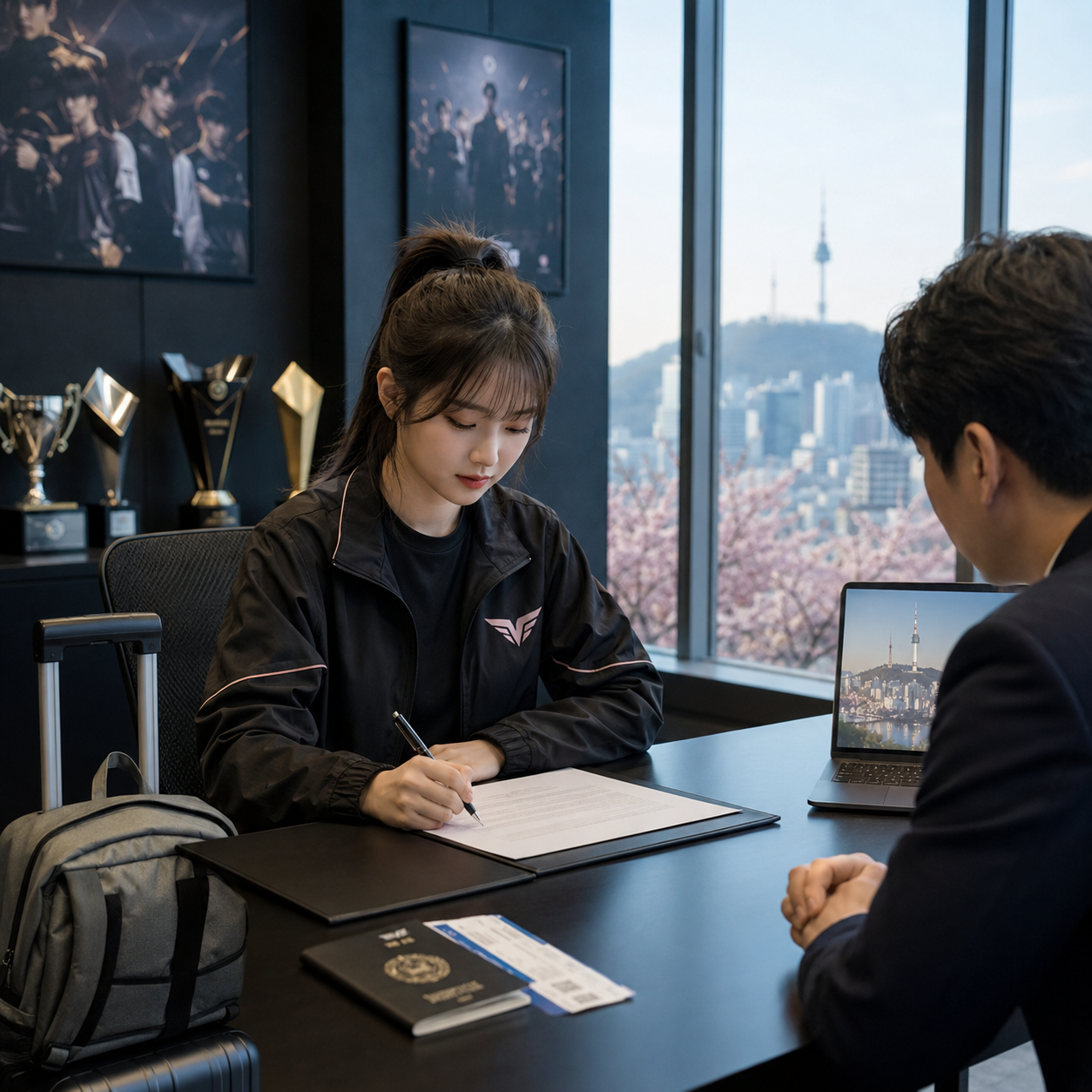
"If she signs with that organization, she'll be relocating to Seoul by spring."
If past simple would base verb
03
"If + past simple, would + base verb"
Second Conditional — Present Hypothetical
Used for situations that are unreal, unlikely, or purely imagined right now — not because they happened in the past, but because they aren't true in the present. Often used to give advice, share an opinion, or imagine a different version of the present. Note the formal "were" instead of "was."
Example
"If I were coaching this team, I'd spend less time drilling mechanics and more time teaching them how to actually talk to each other."
If past perfect would have past participle
04
"If + past perfect, would have + past participle"
Third Conditional — Past Hypothetical / Regret
Used to imagine a different past — something that didn't happen, and can't be changed now. Often carries a sense of regret, relief, or reflection, and pairs naturally with softer modals like "might have" or "could have" when the speaker wants to sound less certain.
Example
"If he hadn't dropped out at seventeen, he might never have ended up on a pro roster at all."
If past perfect would base verb
05
"If + past perfect, would + base verb"
Mixed Conditional — Past Cause, Present Result
Used to connect something that didn't happen (or did happen) in the past to a real situation in the present — perfect for life stories, profiles, and reflections, where someone's past choices are still shaping who they are right now.
Example
"If she hadn't put in those years of unglamorous practice, she wouldn't be standing on that stage tonight."
Were to Should Had
06
"Were ... to / Should ... / Had ..."
Inverted Conditional — Formal Register
A more formal way of building a conditional that drops "if" entirely and inverts the subject and verb instead. Common in writing, official statements, news reports, and high-stakes spoken contexts — it instantly makes a sentence sound more serious and considered.
Example
"Were the sponsorship deal to fall through, the entire roster's future would suddenly be in question."
Unless
07
"Unless ..."
Negative Conditional
A way of saying "if ... not," usually to highlight the one thing that needs to happen to avoid an outcome. It tends to sound a little more urgent or dramatic than a plain negative "if" sentence — useful for warnings, predictions, and rallying calls.
Example
"Unless something changes soon, half this roster will be looking for new teams by the end of the season."
Provided that As long as
08
"Provided that / As long as ..."
Conditional of Assurance
Used to set out a clear condition that, once it's met, more or less guarantees a result. It sounds a notch more formal and confident than a plain "if," which is why it shows up so often in contracts, agreements, and reassurances.
Example
"Provided that the team keeps performing at this level, the contract will almost certainly be renewed."

💡 Language Focus — Conditionals: Real, Hypothetical, and Formal

English conditionals aren't really one structure — they're a whole family of them, and the differences matter. Some describe things that are likely to happen. Others imagine situations that never will. And some exist mainly to make a sentence sound more careful, more serious, or more official. Here's a closer look at three patterns that come up constantly when people talk about careers, choices, and "what if."

Hypothetical / Unreal

Form: If + past simple, would + base verb

Signal: present or future situations that aren't true

If I were him, I'd take the offer.

Use "were" (not "was") for "I/he/she/it" in careful or formal speech — it's a small detail that signals real fluency.

Past Regret

Form: If + past perfect, would have + past participle

Signal: things that didn't happen and can't be undone

If they'd trained harder, they might have qualified.

Swapping in "might have" or "could have" softens the claim — useful when you're speculating rather than stating something with certainty.

Formal / Inverted

Form: Were / Had / Should + subject ...

Signal: writing, official statements, high-stakes speech

Should the deal collapse, we'll need a backup plan.

Dropping "if" and inverting the subject and verb is one of the fastest ways to raise the formality of a sentence.

Watch the escalation — same topic, four different conditional moods:

  • "If you practice every day, you improve." zero — general truth
  • "If you get the offer, you'll probably take it." first — real possibility
  • "If I were your age, I'd think twice before dropping out for a roster spot." second — hypothetical advice
  • "If you'd asked me five years ago whether any of this would be a real career, I'd have said you were dreaming — and I'd have been completely wrong." mixed/third — reflecting on the present
Watch the mismatch: "If I would have known, I would have trained harder" sounds completely natural in casual speech — but in writing or formal contexts, the expected form is "If I had known, I would have trained harder." Doubling "would" in the if-clause is one of the most common conditional slips, even among advanced speakers — worth listening for in your own speech.
In Use
The same conditionals and career vocabulary, in three very different registers
Sports PsychologyOn Burnout, Longevity, and the Myth of Natural Talent

If a young athlete trains intensively for ten years, their body eventually shows it — and the same pattern holds for competitive gaming. If players continue treating ten-hour scrim days as the baseline, burnout will keep cutting careers short well before they need to end. The longevity question isn't really about talent. It's about whether anyone in the organization is paying attention to a person, and not just to a roster spot.

Notice the zero conditional ("if players continue ... burnout will keep cutting") used to state what the writer treats as a general, ongoing pattern — not a one-off prediction.
Panel DiscussionRoundtable — "Going Pro vs. Going to College"

Honestly, if I'd been offered a full scholarship at eighteen, I don't know if I'd have turned it down the way she did — and I think that's exactly the conversation we don't have enough. If you make it, sure, the sponsorship money can be lucrative. But were that one offer to fall through, or were one bad year to happen at the wrong moment, you're suddenly twenty-two with no roster, no degree, and a resume that says "professional underdog" and not much else.

Notice how the speaker shifts from a third-conditional reflection on their own past ("if I'd been offered") into a formal inverted conditional ("were that one offer to fall through") — raising the seriousness right as the stakes in the sentence increase.
Public / Social MediaThread — A Former Pro Looks Back

people keep asking if i regret leaving the team and tbh? if you'd told seventeen-year-old me i'd be 'washed-up' by twenty-three i would have laughed in your face. but here we are. unless something actually changes about how these orgs treat players, this is just going to keep happening to the next kid, and the kid after that.

Notice how the same third-conditional structure ("if you'd told ... I would have laughed") lands completely differently here than in the panel discussion above — lowercase, no punctuation polish, but emotionally direct in a way the formal register can't quite manage.
Register & Stance
Conditionals can sound careful and official, or loose and conversational — the structure you choose shifts the whole register
ContextTypical conditional moveFormality
Academic sports-psych paper "Were performance anxiety left unaddressed, retention rates would likely decline further." Inverted / Formal
Org press statement "Should the partnership be renewed, the roster will remain unchanged through next season." Inverted / Formal
Trade journalism / esports news "If the rumors are accurate, this could be the biggest roster shake-up of the year." Standard "If"
Podcast / panel discussion "If I'm honest, I think half these guys will be burned out by twenty-five." Conversational
Social media / fan chat "if they don't win this one i'm done watching forever lol" Informal / Unpunctuated
Reach for inversion when the stakes rise. "Were X to happen" / "Should Y occur" instantly raises the formality of a sentence — save these for writing or genuinely high-stakes speech, where they land with real weight.
Mixed conditionals connect a person's past to their present. They're one of the most useful structures for profiles, interviews, and reflections — anywhere you need to show how someone's choices are still shaping who they are now.
"If I would have" is common — but considered nonstandard in writing. You'll hear it constantly in casual speech. In essays, articles, or anything more formal, "if I had" is the form readers expect.
Don't blur zero and first conditionals. "If a player loses focus, the team loses too" describes a pattern. "If she signs, she'll move to Seoul" predicts one specific event. Mixing them up changes whether you sound like you're describing a rule or guessing at the future.
Forum Corner
Read the post, then fill in the blanks using the word bank below
Word bank
lucrative
scholarship
roster
burnout
sponsorship
underdog
longevity
washed-up

Why I Walked Away From Pro Play at Twenty-Two

People assume I quit because I wasn't good enough, or because the money wasn't click to fill enough to be worth it. Honestly? It was never about the money. I'd turned down a click to fill at eighteen because I was so sure this was going to be my whole life. And for a while, it kind of was.

Then the org changed our click to fill twice in one year, and I went from starting every match to barely getting scrim time. Somewhere in there, the click to fill just... arrived. Not gradually. It felt like waking up one morning and realizing I hadn't actually wanted to log in for months.

I keep seeing comments calling guys my age "click to fill," like we had some kind of obligation to keep going forever. Nobody warns you that click to fill in this scene basically isn't a thing — that the "veteran" players are usually twenty-four. I lost a major click to fill the same week I quit, and somehow that was the easiest part to let go of. If you'd told the kid who walked into his first LAN as a total click to fill that it would end like this, I don't think he would have believed you. I'm not even sure I regret it. I just wish someone had told me what the back half of this would actually look like.

Analysis Tasks
Identify, build, and evaluate — three analytical exercises
Analysis Task 1

Match the Term to Its Definition

Click a term on the left, then find the definition on the right that matches it.

0 / 6 matched
Career terms
lucrative
burnout
longevity
scholarship
underdog
roster
Definitions
Money awarded to help pay for education, often based on talent or merit
Producing a large amount of money
The official list of players who make up a team
Total physical and mental exhaustion built up over a long period of stress
A competitor that almost everyone expects to lose
The ability of something — especially a career — to last a long time
Analysis Task 2

Build the Conditional

Each sentence below is missing its conditional connector. Pick the right phrase from the bank, then click the blank to complete the thought.

Conditional bank
If
Unless
Provided that
Were the org to
Had she
Complete it: "___ a player keeps grinding without ever resting, the burnout eventually shows up in their results."
click to fill a player keeps grinding without ever resting, the burnout eventually shows up in their results. zero conditional — general truth
Complete it: "___ something changes about how these contracts are written, players will keep losing this fight."
click to fill something changes about how these contracts are written, players will keep losing this fight. negative conditional
Complete it: "___ the new sponsor keeps backing the team, the roster will likely stay together through next year."
click to fill the new sponsor keeps backing the team, the roster will likely stay together through next year. conditional of assurance
Complete it: "___ relocate the whole team overseas, at least two players say they'd walk away rather than go."
click to fill relocate the whole team overseas, at least two players say they'd walk away rather than go. inverted / formal conditional
Complete it: "___ taken that scholarship instead, she might be coaching a college team right now rather than searching for sponsors."
click to fill taken that scholarship instead, she might be coaching a college team right now rather than searching for sponsors. inverted third conditional
Analysis Task 3

Spot the Issue

Is each conditional sentence well-formed, or does something go wrong with the structure, the tense match, or the way it's used? Read carefully — some "issues" are actually intentional style choices.

"If I would have known how short these careers really are, I would have saved more of my signing bonus."
"If the team makes playoffs this year, the org will probably extend everyone's contracts."
"Were the sponsorship to disappear tomorrow, most of this roster would be looking for new teams within the month."
"If she was a better communicator, the team would have won that series, no question."
"Unless something changes, unless the org steps in, unless somebody actually says something — this whole roster is finished."

🗣 Further Discussion

1
If you had to choose between a guaranteed scholarship to study something you love and a risky shot at going pro in esports, which would you take — and why?
2
Many pro players retire by their mid-twenties. Do you think that's a structural problem with the industry, or just the nature of any high-performance career?
3
Sponsorship money has turned esports into a genuinely lucrative path for a small number of players. Does that change how you think about gaming as "just a hobby"?
4
If you were designing a support system for young esports athletes, what would you prioritize — and what current gaps would you try to fix first?
5
Is it fair to call someone an "underdog" once they've already proven themselves at the highest level? Where do you think that label stops applying?